Direct Answer
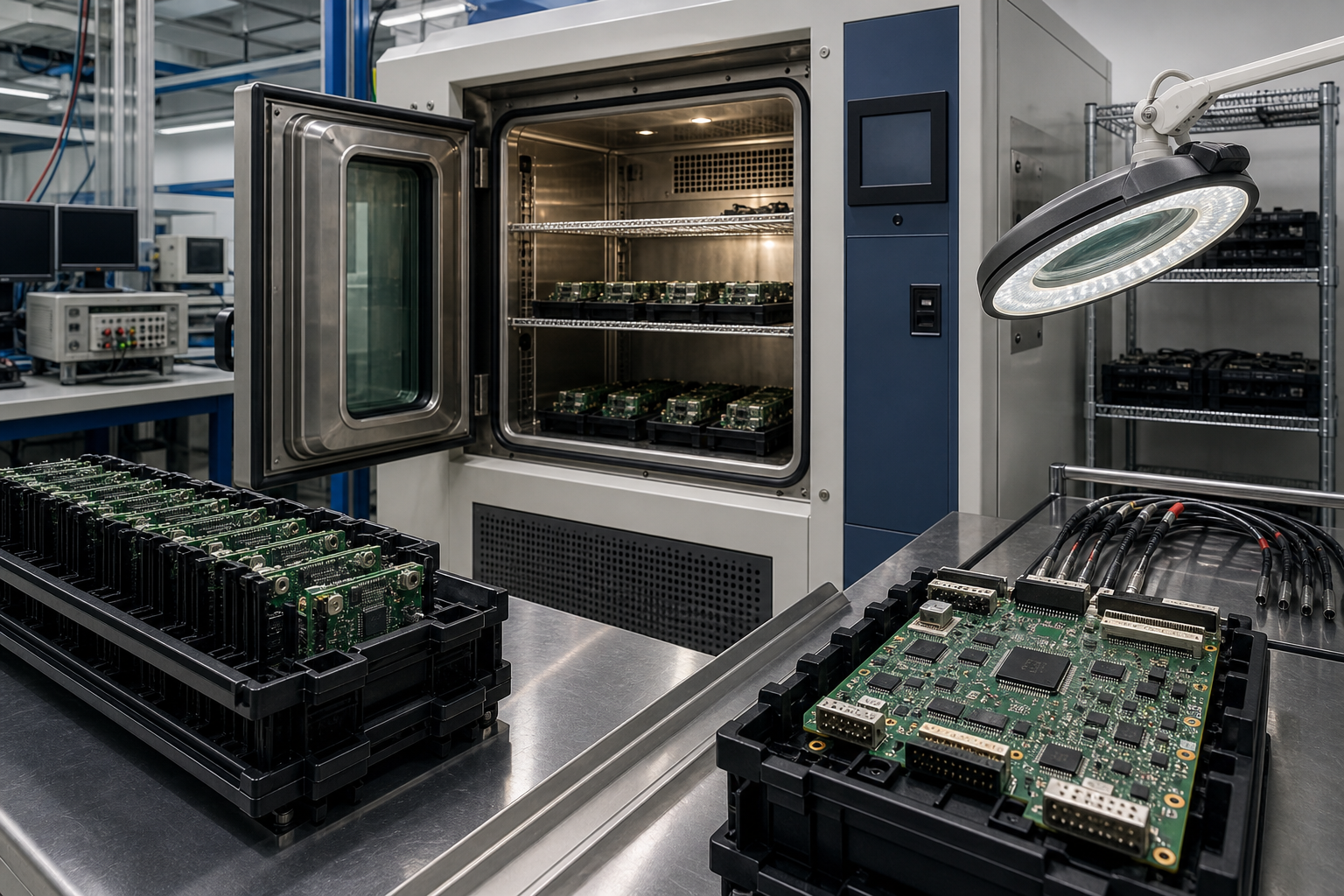
A military PCB project is a high-reliability electronics manufacturing project where the buyer must define controlled PCBA requirements before quoting: material assumptions, DFM closure, component control, inspection coverage, functional testing, environmental reliability expectations, traceability and release records. The supplier should prove process control with evidence, not only capacity claims.
Scope and Compliance Boundary
Military and defense-related electronics can involve project-specific compliance, export-control and customer qualification requirements. Those requirements must be defined by the buyer and reviewed before engagement. This guide focuses on manufacturing quality planning for PCB and PCBA work; it is not a product-use, weapon-system or regulatory approval guide.
KEEP BEST supports high-reliability electronics workflows through industry solution experience, PCBA manufacturing services, box build assembly, quality management, DFM engineering support, RFQ review and OEM manufacturing support.
Core PCBA Requirements
1. Controlled Manufacturing Scope
Define whether the supplier handles bare PCB fabrication coordination, PCBA assembly, component sourcing, programming, conformal coating, cable integration, box build, functional testing, packaging and shipment release.
2. DFM and Build Readiness
Before pilot production, close DFM findings around board thickness, copper weight, surface finish, high-current areas, creepage and clearance, polarity marks, fiducials, panel rails, connector retention, coating keep-out zones and test access.
3. Component and BOM Control
High-reliability builds need clear MPN approval, lifecycle review, alternate control, lot handling, MSL handling, ESD control and incoming inspection rules. Substitution should be approved before production, not after material shortage appears.
4. Inspection and Test Coverage
The RFQ should define SPI, AOI, X-ray when needed, ICT, FCT, programming, burn-in, conformal coating inspection, cable/connector checks and final acceptance criteria.
5. Traceability and Release Records
Lot traceability should connect PCB lot, component lot, work order, operator/process step, inspection result, test result, rework record and shipment release. Buyers should ask how records are stored and retrieved.
Common Project Risks
| Risk area | What can go wrong | Buyer control point | |---|---|---| | Scope | PCB, PCBA, test and box build responsibilities are split unclearly | Define one responsibility matrix | | DFM | Design files move to pilot with open manufacturability issues | Require DFM closure before build | | Components | Unapproved alternates affect function or reliability | Lock MPN and substitution approval | | Testing | Functional coverage is too shallow for field conditions | Define ICT/FCT and reliability expectations | | Records | Lot and test data cannot be connected later | Require traceability map and sample report | | Release | Packaging, labeling and shipment release are treated as afterthoughts | Define release package before volume ramp |
Supplier Checklist for RFQ Review
- Can the supplier separate bare PCB, PCBA, test, coating, cable and box build responsibilities?
- Are DFM findings documented, assigned and closed before pilot production?
- Does the supplier manage MPN approval, alternates, lifecycle and incoming inspection?
- Which inspection and test steps are included by default and which are optional?
- Can the supplier provide sample traceability records before production?
- Are rework limits, deviation approval and nonconformance handling defined?
- Can prototype, pilot and volume production follow the same evidence structure?
Practical Recommendation
Treat military PCB sourcing as evidence-based PCBA qualification. The best supplier response should include a build scope, DFM closure path, inspection and test plan, traceability structure, release package and clear open items. A quote that only lists unit price and lead time is not enough for high-reliability electronics buyers.
FAQ
Is military PCB only about the bare printed circuit board?
No. Buyers often use the term to describe the full electronics build, including PCB fabrication assumptions, PCBA assembly, inspection, test, coating, box build and release records.
What should be included in the first RFQ?
Include Gerber/ODB++ files, BOM, drawings, test requirements, coating requirements, connector/cable details, expected records, target quantities and compliance constraints defined by the buyer.
Why is DFM important for high-reliability PCBA?
DFM closes preventable manufacturing risks before pilot production. It also helps align fabrication, assembly, inspection, coating and testing assumptions.
Does every project need the same test plan?
No. Test coverage depends on product function, operating environment, customer requirements and acceptance criteria.
What is the most useful supplier evidence?
A sample package showing DFM findings, inspection plan, test records, traceability map, rework control and release documentation.