Quick Answer
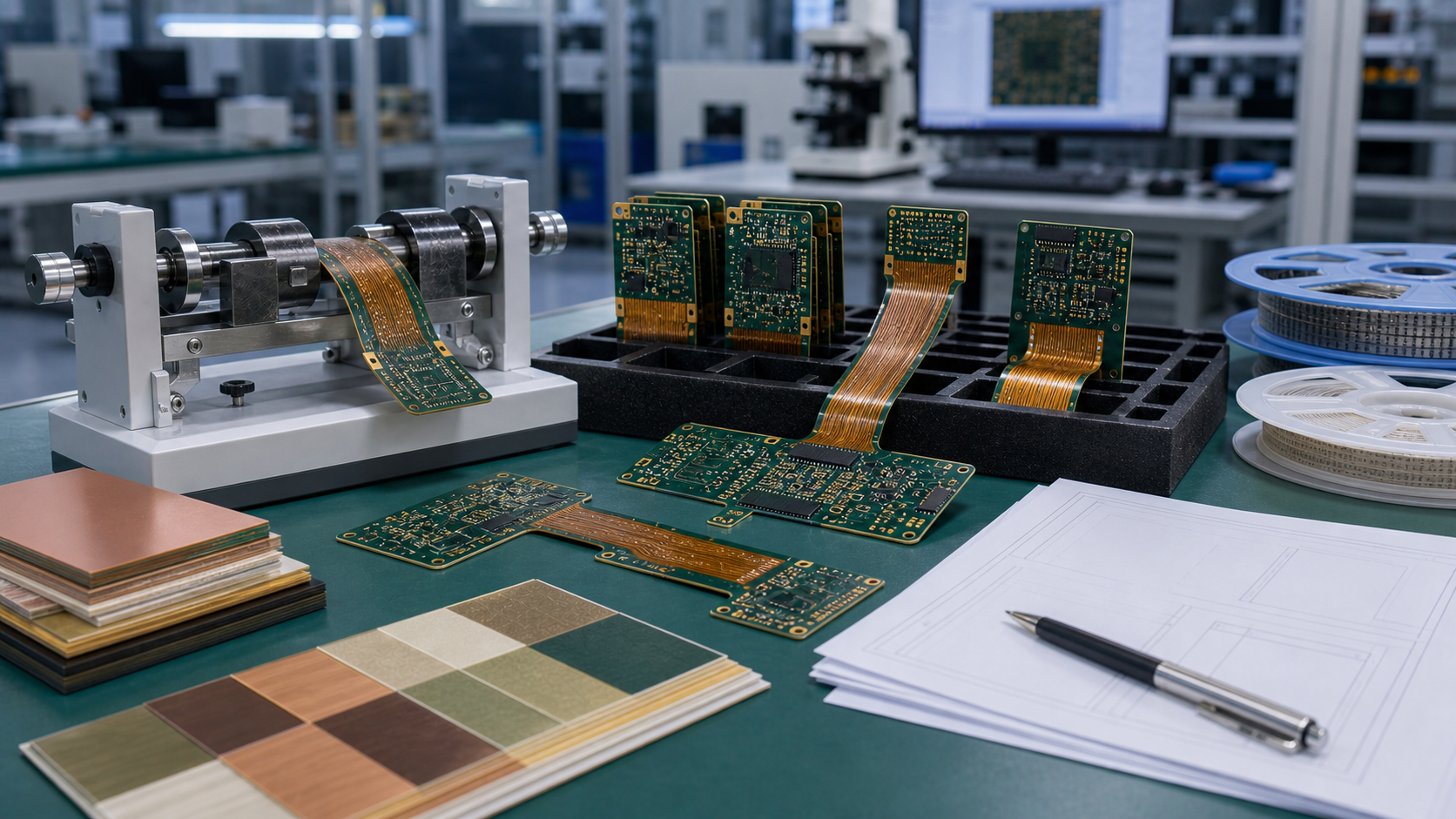
Rigid-flex PCB manufacturers must control both rigid board construction and flexible circuit behavior. Material selection affects bend radius, copper fatigue, impedance, assembly handling, enclosure fit and long-term reliability, so the RFQ should include more than a simple layer count.
How Buyers Should Read This Topic
Rigid-flex boards are often selected to save space, reduce connectors or improve mechanical integration. These benefits depend on early engineering alignment between product design, PCB fabrication, assembly process and final enclosure constraints.
KEEP BEST connects this work through PCBA manufacturing services, quality management, DFM engineering support, RFQ review, OEM manufacturing, ODM engineering support, box build assembly and industry solutions so buyers can review manufacturing, engineering, quality and delivery boundaries before pricing is locked.
Buyer Checklist
1. Define rigid and flex layer counts, bend areas, dynamic or static flex requirements and expected bend radius.
2. Confirm polyimide, adhesive, coverlay, stiffener, copper thickness and surface finish options.
3. Review impedance, shielding, via placement and transition areas between rigid and flex sections.
4. Check panelization, tooling holes, carrier support and SMT handling strategy.
5. Avoid placing heavy components, sharp corners or stress concentrators in bend zones.
6. Use prototype builds to verify fit, folding sequence, cable strain and test access.
Supplier Evidence Table
| RFQ area | Evidence to request | Why it matters | |---|---|---| | Stackup | Rigid and flex material confirmation | Aligns construction with mechanical use | | Bend | Bend radius and flex-zone review | Reduces fatigue risk | | Support | Stiffener and carrier plan | Improves assembly handling | | Electrical | Impedance and transition review | Protects signal performance | | DFM | Fit and stress feedback | Prevents enclosure issues |
RFQ Questions to Ask
- Is the flex area static or dynamic in the final product?
- What bend radius and folding sequence are expected?
- Which materials and stiffeners are recommended for the application?
- How will the board be supported during SMT assembly?
- What DFM issues could affect enclosure fit or long-term reliability?
Practical Recommendation
Select rigid-flex suppliers through engineering evidence. The best quote should include material choices, bend assumptions, DFM feedback and assembly handling details.
FAQ
Why is bend radius important?
A bend radius that is too tight can damage copper and shorten product life.
Do rigid-flex boards need special assembly handling?
Yes. Carriers, stiffeners and panel support may be needed to keep SMT assembly stable.
When should material selection happen?
Material selection should happen before layout release, not after the RFQ is already fixed.