Quick Answer
A medical PCB manufacturer supplies printed circuit boards for medical device electronics and often supports the manufacturing handoff into PCBA assembly, inspection, testing, traceability and release packaging. Buyers should evaluate the supplier by process control and evidence, not only by board price or layer count.
What a Medical PCB Manufacturer Does
Medical PCB manufacturing may include material selection, stackup review, controlled impedance checks, surface finish selection, panelization, fabrication quality control and coordination with downstream assembly. When the same EMS partner also manages PCBA, the buyer can connect board fabrication assumptions with soldering, inspection, testing and release records.
KEEP BEST supports this workflow through medical PCBA solutions, PCBA manufacturing services, quality management, DFM engineering support, RFQ review, OEM manufacturing and box build assembly. Buyers comparing broader manufacturing scope can also review electronic manufacturing services for medical RFQ planning.
Common Medical PCB Use Cases
Medical PCB suppliers may support diagnostic devices, patient-monitoring electronics, wearable medical products, therapy equipment, laboratory instruments, imaging accessories, power-control modules and embedded sensor systems. These applications often require stable materials, clean documentation, predictable solderability and careful handling during packaging and shipment.
The required record level depends on the product and buyer requirements. Some projects need ISO 13485-aligned documentation, while others mainly need controlled DFM feedback, acceptance criteria, lot traceability and test results that can support internal review.
Buyer Checklist
1. Define the Manufacturing Scope
Clarify whether the supplier is responsible only for bare PCB fabrication or also for PCBA assembly, component sourcing, programming, testing, coating, packaging and release documentation.
2. Review PCB Construction Risk
Check layer count, stackup, material, copper weight, surface finish, impedance, via structure, board thickness and panelization. These details can affect both fabrication yield and assembly reliability.
3. Connect DFM With Medical Records
Ask for DFM feedback on spacing, polarity marks, fiducials, panel rails, test access, thermal pads and component placement. Open findings should be closed before pilot production.
4. Confirm Quality Evidence
Define incoming inspection, fabrication reports, AOI, X-ray if needed, first article review, rework limits, deviation approval and outgoing quality records.
5. Plan Traceability
The buyer should know how PCB lot, component lot, work order, inspection result, test result and shipment release are linked.
6. Check Packaging and Release
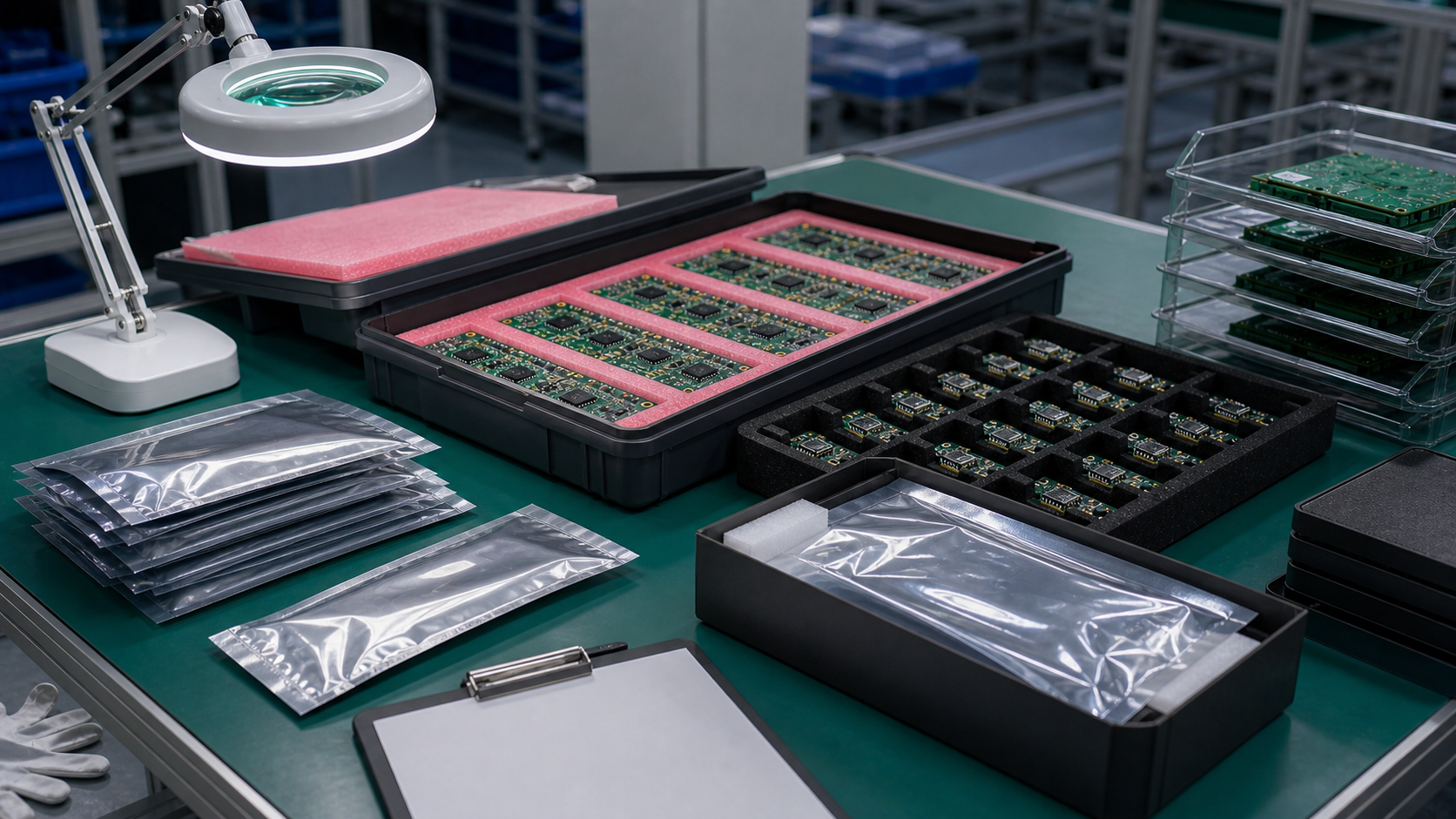
Medical electronics buyers should confirm ESD packaging, moisture protection, tray method, labeling rules if required, shipment documents and release approvals before production volume increases.
Supplier Evidence Table
| RFQ area | Evidence to request | Why it matters | |---|---|---| | Scope | Bare PCB vs PCBA responsibility | Prevents handoff gaps | | Construction | Stackup, material and finish confirmation | Protects manufacturability and reliability | | DFM | Findings and closure actions | Reduces preventable defects | | Quality | Inspection and acceptance records | Supports controlled medical electronics builds | | Traceability | Lot and work-order linkage | Supports audit and field feedback | | Packaging | ESD, tray and release method | Reduces handling and shipment risk |
RFQ Questions to Ask
- Which part of the project is PCB fabrication and which part is PCBA manufacturing?
- What material, stackup and surface finish assumptions affect the quote?
- Which DFM findings must be closed before pilot production?
- Which quality records are included by default?
- How are lots, work orders, inspection results and test data connected?
- What packaging and shipment-release evidence can be provided?
- Can the same supplier support prototype, pilot and production stages?
Practical Recommendation
Choose a medical PCB manufacturer by evidence. The most useful supplier response should show how the board will be built, inspected, assembled if required, tested, traced, packaged and released. A quote that only lists board price and lead time is incomplete for medical device electronics buyers.
FAQ
Is a medical PCB manufacturer the same as a medical PCBA supplier?
Not always. A PCB manufacturer may focus on bare boards. A medical PCBA supplier also assembles components, manages inspection, testing and release evidence.
Does every medical PCB need ISO 13485 records?
Not every project needs the same record level. If ISO 13485-aligned evidence is expected, the RFQ should state that before pricing is finalized.
What is the first thing to check?
Start with manufacturing scope, design file readiness, material assumptions, DFM status and required quality records.
Why is packaging part of the supplier review?
Packaging protects boards from ESD, moisture and handling damage, and it is part of the release evidence buyers may need.
Can overseas EMS partners support medical PCB buyers?
Yes, when engineering communication, quality records, traceability, testing and shipment release are controlled clearly.