Direct Answer
Single-sided PCB assembly places components mainly on one side of the board, which can reduce cost and simplify routing for suitable products. It still needs controlled DFM, SMT process planning, inspection coverage and functional testing. A simple board layout does not automatically mean a low-risk assembly project.
When Single-sided PCB Assembly Works Well
Single-sided PCB assembly can suit LED modules, simple control boards, power interface boards, sensor boards, appliance controls, industrial submodules and cost-sensitive products with moderate density. It becomes risky when the design needs high component density, tight thermal control, complex test access or difficult connector placement.
KEEP BEST supports this workflow through PCBA manufacturing services, quality management, DFM engineering support, RFQ review, OEM manufacturing, box build assembly and 0201 and 01005 SMT assembly process requirements.
Key Process Risks
| Risk area | What to check | Why it matters | |---|---|---| | Board layout | Component spacing, polarity and connector orientation | Prevents placement and inspection mistakes | | Thermal design | Copper area, heat paths and solder joint stress | Protects reliability in operation | | Soldering | Paste volume, pad design and reflow assumptions | Reduces bridging, tombstoning and weak joints | | Test access | Probe points and fixture clearance | Enables stable ICT/FCT planning | | Handling | Board support, panelization and depaneling | Prevents bending or edge damage | | Release records | Inspection, test and traceability data | Supports buyer acceptance and field feedback |
Inspection and Test Fixture Planning
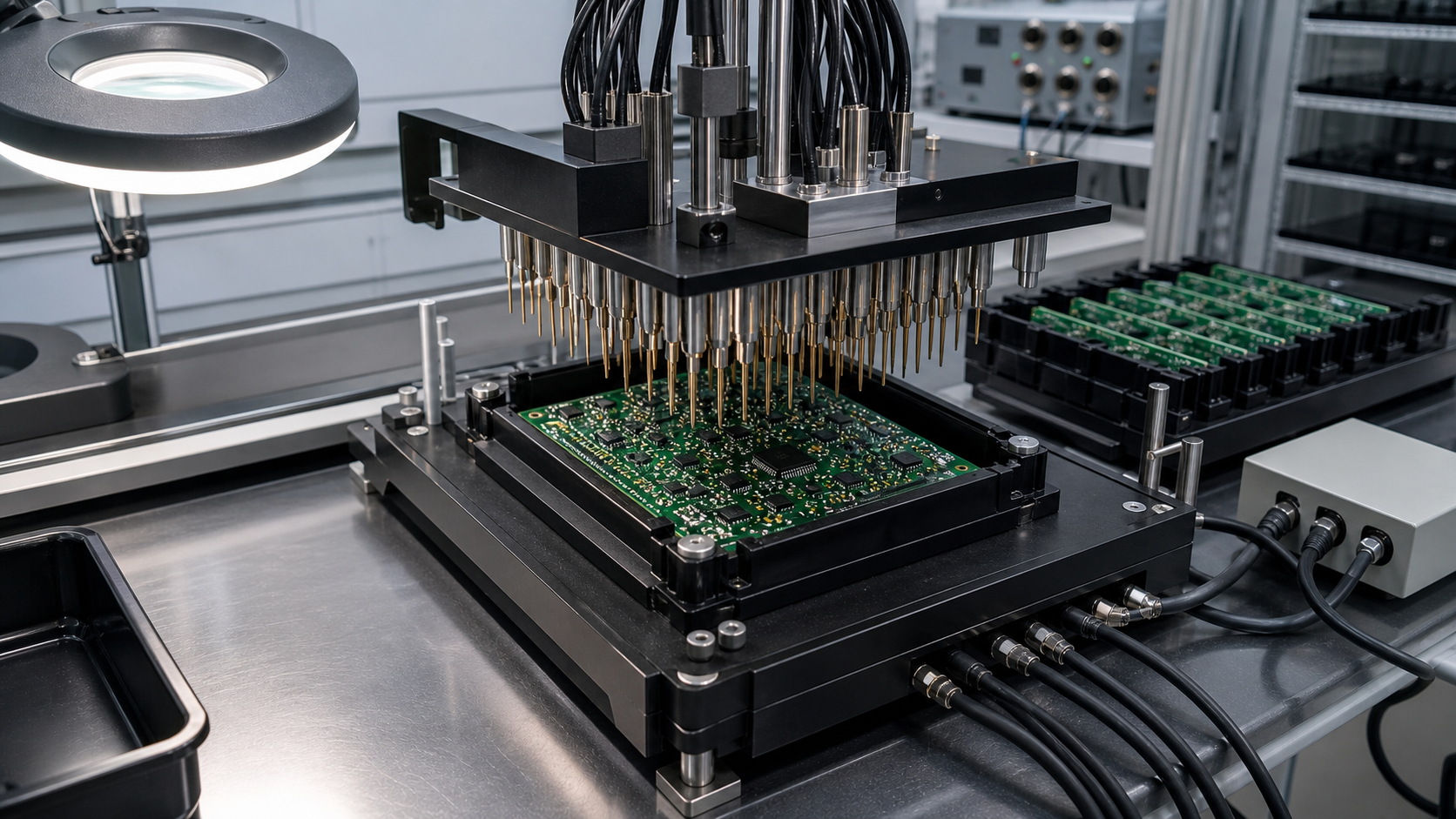
Single-sided boards can still need AOI, ICT, FCT, programming, visual inspection and fixture-based functional validation. Buyers should confirm test point access before layout freeze, especially when the product needs repeatable production testing or field-failure investigation.
RFQ Questions to Ask
- Is the design truly suitable for single-sided assembly, or is density forcing hidden risk?
- Which DFM items must be closed before pilot production?
- What SMT inspection steps are included by default?
- Are test points and fixture clearance sufficient for ICT or FCT?
- How will panelization and depaneling protect the board edges?
- Which records are provided after pilot and volume builds?
- Can the same supplier support redesign suggestions if single-sided layout creates risk?
Practical Recommendation
Use single-sided PCB assembly when the design supports it naturally, not only because it looks cheaper. The supplier should validate DFM, soldering, inspection, fixture testing and release records before volume production.
FAQ
Is single-sided PCB assembly always cheaper?
Often it can be cost-effective, but only when routing, thermal design, test access and mechanical constraints remain simple.
Can single-sided boards use SMT?
Yes. Many single-sided boards use SMT components, and some also include through-hole or connector operations.
What is the first item to review?
Start with DFM: component spacing, polarity, pad design, test access, panelization and connector location.
Why is a test fixture still important?
A fixture helps make production testing repeatable and connects each board to objective pass/fail evidence.
What should the RFQ include?
Include Gerber or ODB++ files, BOM, assembly drawings, testing needs, target volume, acceptance criteria and required records.