Direct Answer
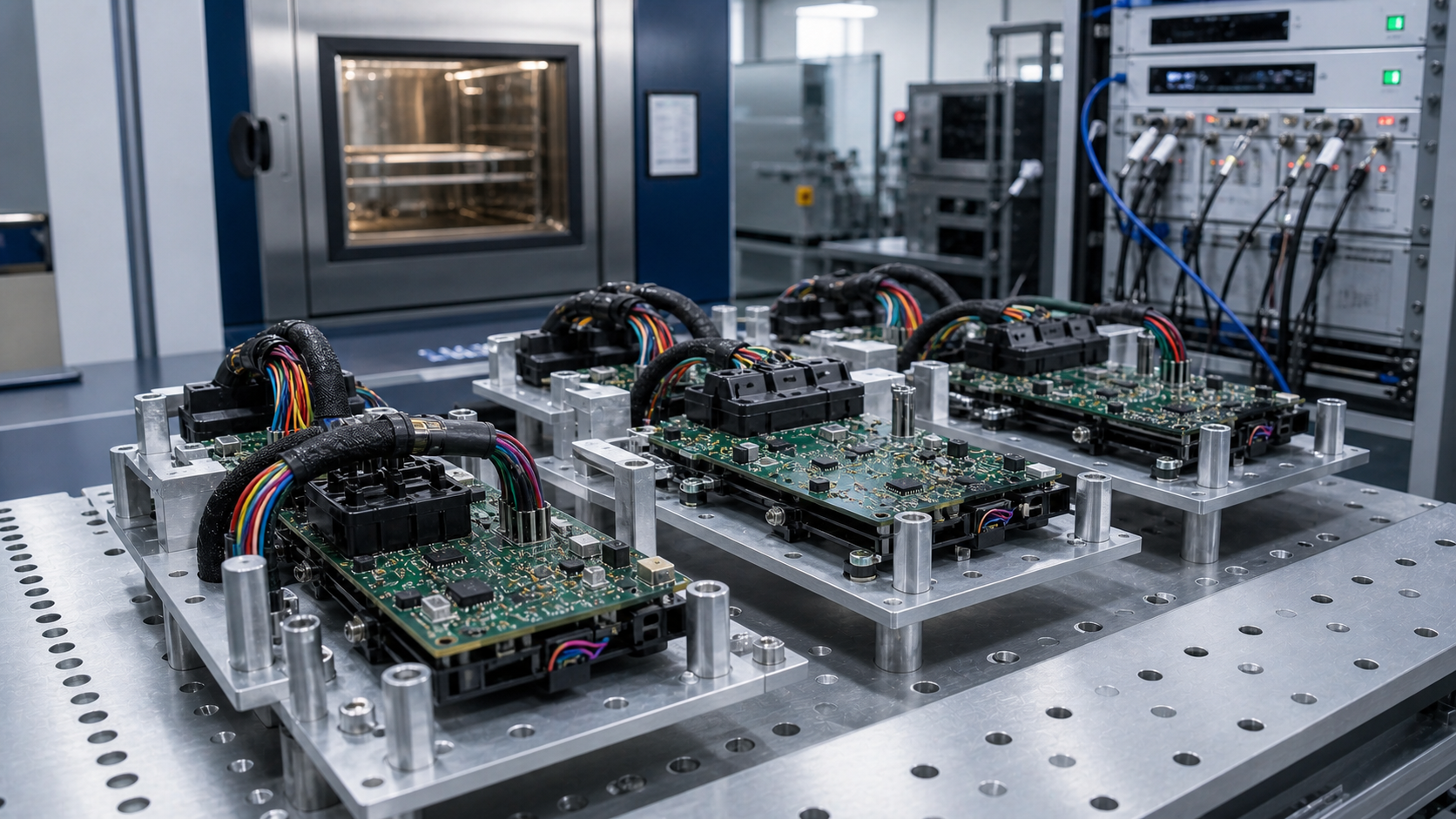
Automotive PCBs are circuit boards and assemblies used in vehicle electronics such as control modules, sensors, lighting, power interfaces, and connectivity systems. Buyers should evaluate them as PCBA reliability projects because vibration, heat, humidity, connectors, traceability, and long production life all affect risk.
Why Buyers Should Confirm This Early
Automotive programs often run longer than consumer electronics and face harsher operating conditions. A board can pass prototype bring-up but still fail during thermal cycling, vibration, connector stress, material substitution, or uncontrolled process changes. The RFQ should define the evidence required before price comparison.
Buyer Checklist
| Check area | Buyer risk | Evidence to request | | --- | --- | --- | | Application boundary | Different vehicle locations face different heat, vibration, and moisture exposure. | Use case, enclosure, duty cycle, and operating environment | | Material and assembly control | Stack-up, copper, solder alloy, and surface finish affect long-term reliability. | Material list, process assumptions, and first article record | | Traceability | Field issues require lot history and change control. | BOM lot, process traveler, test data, and deviation log | | Test coverage | Connector, power, and intermittent failures may escape visual checks. | ICT, FCT, burn-in or reliability screening plan |
RFQ Questions to Ask
- Where will the automotive PCB operate, and what temperature, vibration, humidity, and connector stress should be assumed?
- Which material, copper, finish, solder, coating, cleaning, and packaging controls are included?
- How will the supplier approve component alternates, process changes, rework, and deviations?
- What inspection, electrical test, functional test, and release records will be returned with each lot?
Supplier Red Flags
- The quote gives unit price and lead time but does not define material, process, inspection, and test boundaries.
- Alternates, rework, deviations, failed tests, and lot traceability do not have an approval path.
- First article release, in-process inspection, outgoing QA, and nonconforming material handling are unclear.
- Critical promises are not backed by a record template that can be returned with the shipment.
How KEEP BEST Connects the Work
For this type of project, buyers should connect PCBA manufacturing services, DFM engineering review, quality management, RFQ review workflow, industry solution overview, box-build integration, automotive PCB assembly SMT risk guide, automotive PCBA traceability and test evidence in one review path so quotation, engineering, quality, and delivery evidence stay aligned.
Practical Recommendation
Ask suppliers to quote automotive PCBs as a controlled PCBA workflow. A strong answer should connect DFM, material approval, SMT process evidence, traceability, functional test, and shipment readiness into one release plan.
FAQ
Are automotive PCBs always built to the same standard?
No. Requirements depend on product location, electrical load, safety relevance, lifetime target, customer standard, and validation plan.
Is bare-board quality enough to judge risk?
No. Automotive risk often appears at the PCBA level through solder joints, connectors, coating, test coverage, and change control.
What should be compared before price?
Compare process evidence, traceability, test plan, change-control discipline, and delivery records before comparing unit price.