Direct Answer
A dental equipment PCB assembly manufacturer should be evaluated by how it controls the build, not only by whether it can quote a dental electronics project. Buyers should compare design review, material control, SMT and mixed assembly route, test coverage, first article evidence, traceability records and change-control discipline before choosing a supplier.
This page is different from the dental equipment PCB assembly RFQ checklist. That checklist focuses on what buyers should send in the RFQ package. This guide focuses on how to compare a manufacturer after the project scope is understood. Use it with PCBA manufacturing services, medical electronics PCBA solutions, DFM engineering review, quality and traceability controls, PCBA supplier evidence requirements and the broader RFQ submission path when shortlisting a PCBA partner for dental equipment electronics.
What A Dental PCBA Manufacturer Must Clarify
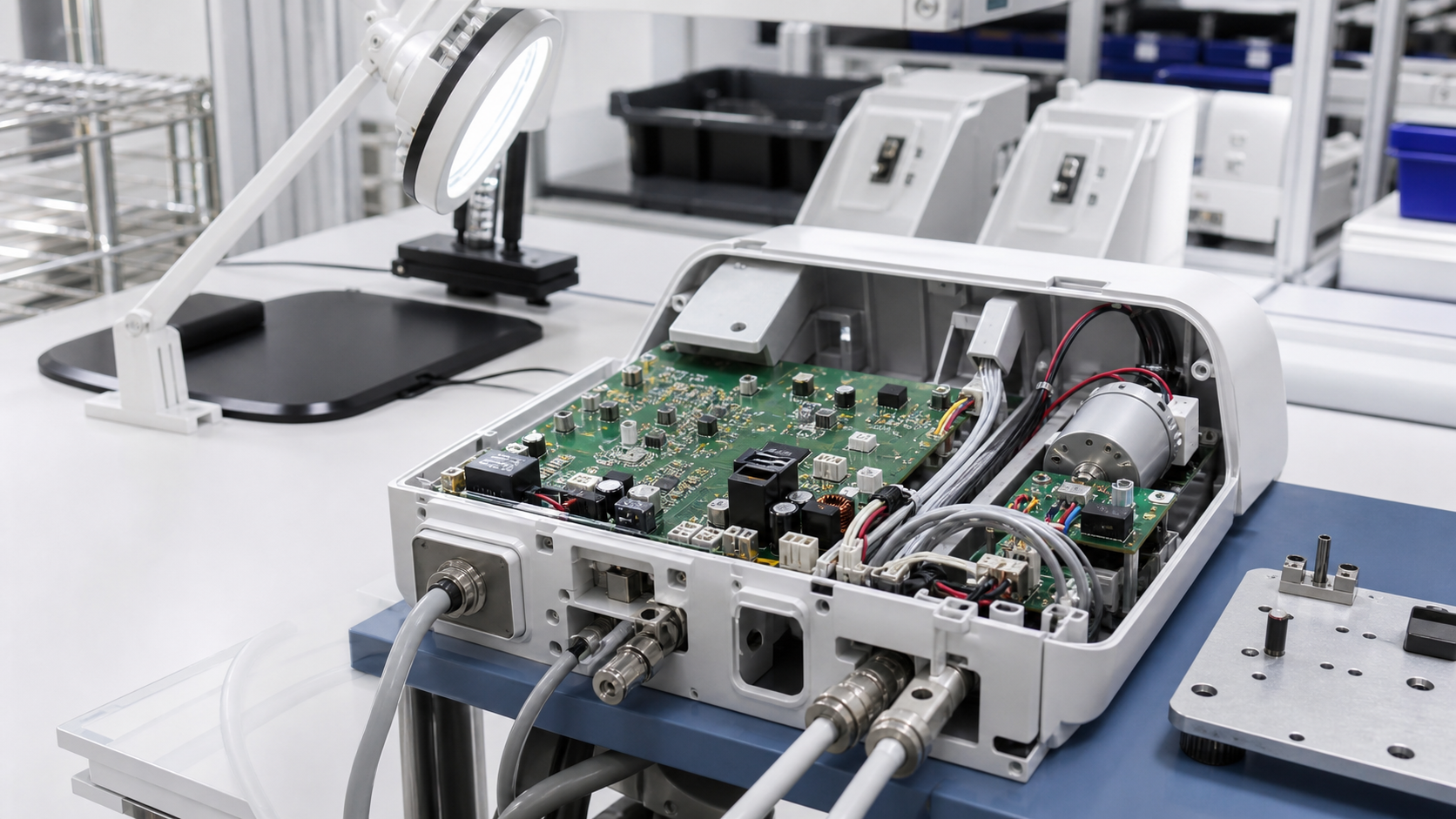
Dental equipment electronics can sit near motors, pumps, imaging modules, lighting, user interfaces, sterilization-adjacent areas or chair-side control systems. The manufacturer does not need to guess the device classification, but it does need to understand how the PCBA will be assembled, inspected, tested, packed and released for the buyer's project.
A useful response separates confirmed scope from assumptions. If the buyer expects turnkey sourcing, DFM review, PCBA assembly, firmware loading, functional testing, box-level integration or shipment-ready records, each item should be stated before price comparison. If a certification, standard, test method or regulatory record is required, the buyer should request evidence instead of treating the keyword "dental" as proof of capability.
Manufacturer Evaluation Checklist
- Engineering review: the supplier can review Gerber, ODB++, BOM, placement data, assembly drawings, test notes and mechanical constraints before committing to production.
- Material control: approved parts, alternates, lifecycle risk and customer-supplied materials are separated in the quotation.
- Assembly route: SMT, through-hole, selective soldering, manual assembly, cleaning, coating, firmware loading and final inspection are listed as included or excluded steps.
- Dental equipment context: motor-control outputs, sensor interfaces, user-interface boards, cleaning exposure, enclosure fit and cable strain are reviewed where relevant.
- Test coverage: AOI, SPI, X-ray, ICT, FCT, calibration, fixture planning or system checks are matched to the project risk.
- Evidence return: DFM comments, BOM risk notes, first article records, process records, test logs and outgoing inspection evidence are defined before shipment.
Process Controls Buyers Should Compare
Design and DFM control
The manufacturer should connect the quote to DFM engineering review instead of moving directly from files to production. Ask whether the supplier will record open DFM questions, component spacing issues, connector orientation concerns, panelization limits, test-point gaps and rework risks. The answer should be project-specific, not a generic statement that DFM is available.
BOM and alternate-part control
For dental equipment PCBA, material substitutions can affect electrical behavior, firmware compatibility, cable interface, mechanical fit and validation evidence. Use the BOM alternative approval guide to define which alternates require buyer approval. A stronger manufacturer will explain how AVL, lifecycle risk, MSL handling, customer-owned parts and shortage escalations are controlled.
SMT and assembly route
The assembly route should show how the board moves through stencil printing, placement, reflow, AOI, X-ray or microscope inspection, through-hole work, cleaning, coating, programming and packaging. Buyers can compare this with PCB assembly process controls to confirm whether the supplier's quoted route matches the product risk.
Test and release evidence
Functional test may be more important than visual inspection for dental electronics. The buyer should confirm whether the manufacturer can support fixture discussion, firmware loading, current measurement, sensor input simulation, motor-control checks, calibration support or final acceptance records. Where first article release matters, connect the request with the first article inspection checklist.
Red Flags During Supplier Selection
| Red flag | Why it matters | Buyer response | |---|---|---| | The quote only lists unit price and lead time | Hidden DFM, sourcing and test assumptions may appear later | Request a written assumptions list | | The supplier says every alternate part is equivalent | Dental equipment may depend on fit, firmware or test behavior | Require buyer approval rules | | Test coverage is vague | Visual pass does not prove functional performance | Ask for test method and returned records | | Quality evidence is generic | Supplier comparison becomes a brochure review | Request project-level evidence examples | | Change control is unclear | Repeat builds can drift after the first sample | Define revision and substitution approval |
Recommended Comparison Path
Start with the RFQ inputs in the dental equipment PCB assembly RFQ checklist, then ask each manufacturer to return a comparable evidence package. The package should show DFM findings, BOM risk notes, process route, test plan, first article expectations, traceability records and open assumptions. This keeps supplier selection tied to project evidence instead of brand claims.
For KEEP BEST EMS inquiries, buyers can use RFQ submission path to send files and connect the review with PCBA manufacturing services, medical electronics PCBA solutions, quality and traceability controls and PCBA supplier evidence requirements. The goal is to compare manufacturing control, evidence and communication path before awarding the first build.
Claims That Need Proof
Do not publish or accept unsupported claims about ISO scope, regulated medical-device approval, sterilization compatibility, lead time, capacity, yield, customer names or guaranteed compliance. These items should be confirmed with records, scope, expiry date, project applicability and responsible party. When evidence is not available, write the item as an assumption or mark it for manual confirmation.
FAQ
How should buyers choose a dental equipment PCB assembly manufacturer?
Compare the supplier's DFM review, material control, assembly route, test coverage, first article evidence, traceability and change-control process before comparing unit price.
Is a dental PCBA manufacturer the same as a medical PCB assembly supplier?
Not always. Dental equipment may share medical-electronics risks, but the buyer still needs project-specific evidence for the actual board, enclosure, test method and release records.
What should be checked before a sample build?
Check controlled files, BOM assumptions, DFM findings, assembly route, test coverage, first article criteria, returned records and any unresolved buyer approvals.
Can a supplier claim dental equipment capability without certificates?
A supplier can discuss manufacturing support, but certification, regulated-device approval or special compliance claims need evidence. If evidence is not available, keep the statement limited and request manual confirmation.