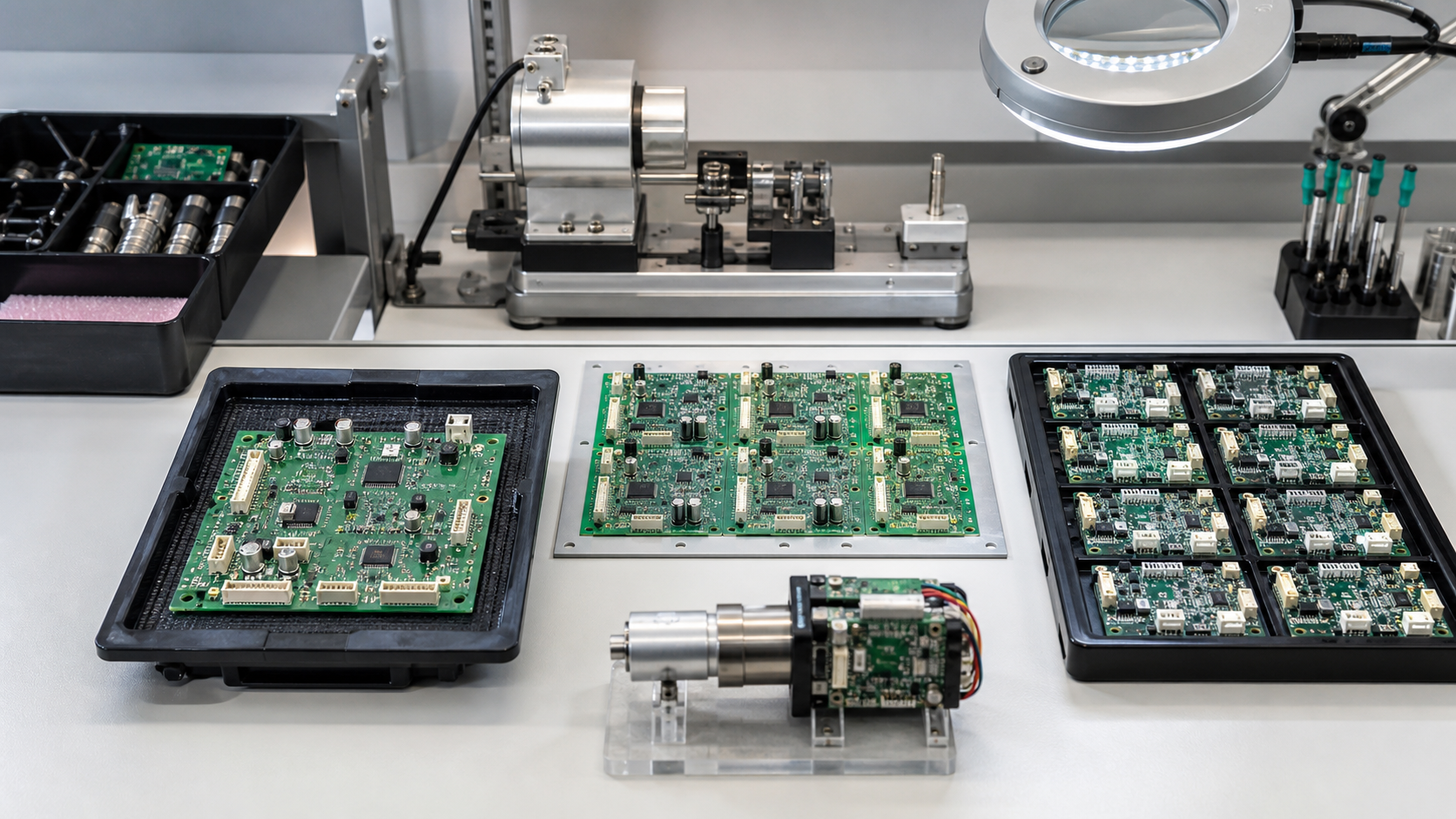
Direct Answer
Dental equipment PCB assembly should move from prototype to production through controlled NPI gates, not by simply repeating the first working sample. The buyer should confirm the design revision, DFM closure, component approval, programming method, test fixture, acceptance evidence, packaging requirement and change-control path before asking a supplier to quote production volume.
This guide is a dental-equipment-specific NPI checklist. It is related to the broader PCBA NPI from prototype to production page, but it focuses on dental control boards, compact motor-control modules, handpiece interfaces, cable connections and service-life evidence. For supplier context, also connect it with the dental PCB RFQ checklist, dental PCBA manufacturer evidence guide, DFM engineering review, quality and traceability controls and the RFQ submission path.
What Changes Between Prototype And Production
A prototype build proves that the design can be assembled and tested once. Production readiness requires repeatable files, stable component decisions, defined inspection criteria and a process that can be followed by more than one operator or build lot. For dental equipment, the gap often appears in connectors, motors, cable routing, coating decisions, fixture access, firmware handling and packing protection.
Before moving beyond prototype, the buyer should close open DFM issues, lock the board revision, review the BOM for alternates, confirm whether firmware is buyer-loaded or supplier-loaded, and define which records must return with each build. If the project still needs a fast engineering build, compare the plan with turnkey prototype assembly before treating it as a production release.
NPI Gates To Control
- Design freeze gate: PCB files, BOM, mechanical envelope and dental device interface assumptions are aligned.
- DFM and DFA gate: connector orientation, test access, solderability, handling and packaging constraints are reviewed.
- Pilot build gate: first article evidence, inspection records and functional test results are reviewed before ramp.
- Programming gate: firmware file, version control, labeling and responsibility are defined with reference to firmware programming production control.
- Quality gate: returned records match the risk of the dental module instead of using generic inspection language.
- Change gate: any substitute component, PCB revision, fixture change or test method update has buyer approval.
Evidence Buyers Should Ask For
Ask the supplier to return DFM notes, unresolved assumptions, a process flow, inspection plan, test coverage, first article evidence, lot traceability expectation and packaging proposal. If dental device certification, regulatory files or customer-specific records are required, request the actual evidence and scope. Do not treat a keyword in the RFQ as proof that the supplier has a confirmed certification or approved process.
The supplier should also state what is outside the quote. Examples include final device calibration, clinical validation, tooling ownership, product labeling, regional compliance review or field-service documentation. Those may be buyer responsibilities or separate work packages, and they should not be hidden inside a PCBA assembly price.
Dental Equipment Risk Areas
Dental electronics may include small motors, compact control boards, handpiece connectors, cleaning or moisture exposure assumptions, user-interface wiring and enclosure limits. The NPI review should check whether connector retention, cable strain relief, motor-control thermal behavior, programming access and test fixture coverage are practical for repeated builds. For adjacent diagnostic devices, compare with the diagnostic PCBA RFQ checklist while keeping the dental NPI owner separate.
Production Decision Checklist
- Controlled PCB, BOM and assembly revision.
- Closed DFM comments or documented open risks.
- Approved alternates and sourcing assumptions.
- Defined programming and version-control method.
- Test fixture, functional test and acceptance criteria.
- Packaging, ESD, moisture and handling requirements.
- Records required for first article, pilot build and repeat production.
- Clear next action: pilot build, production transfer, or design update.
Next Step
Send the controlled dental equipment PCBA package through the KEEP BEST EMS RFQ path and ask for a response that separates confirmed scope, assumptions and open actions. The right production decision is based on evidence, not only on whether the prototype powered on.