Direct Answer
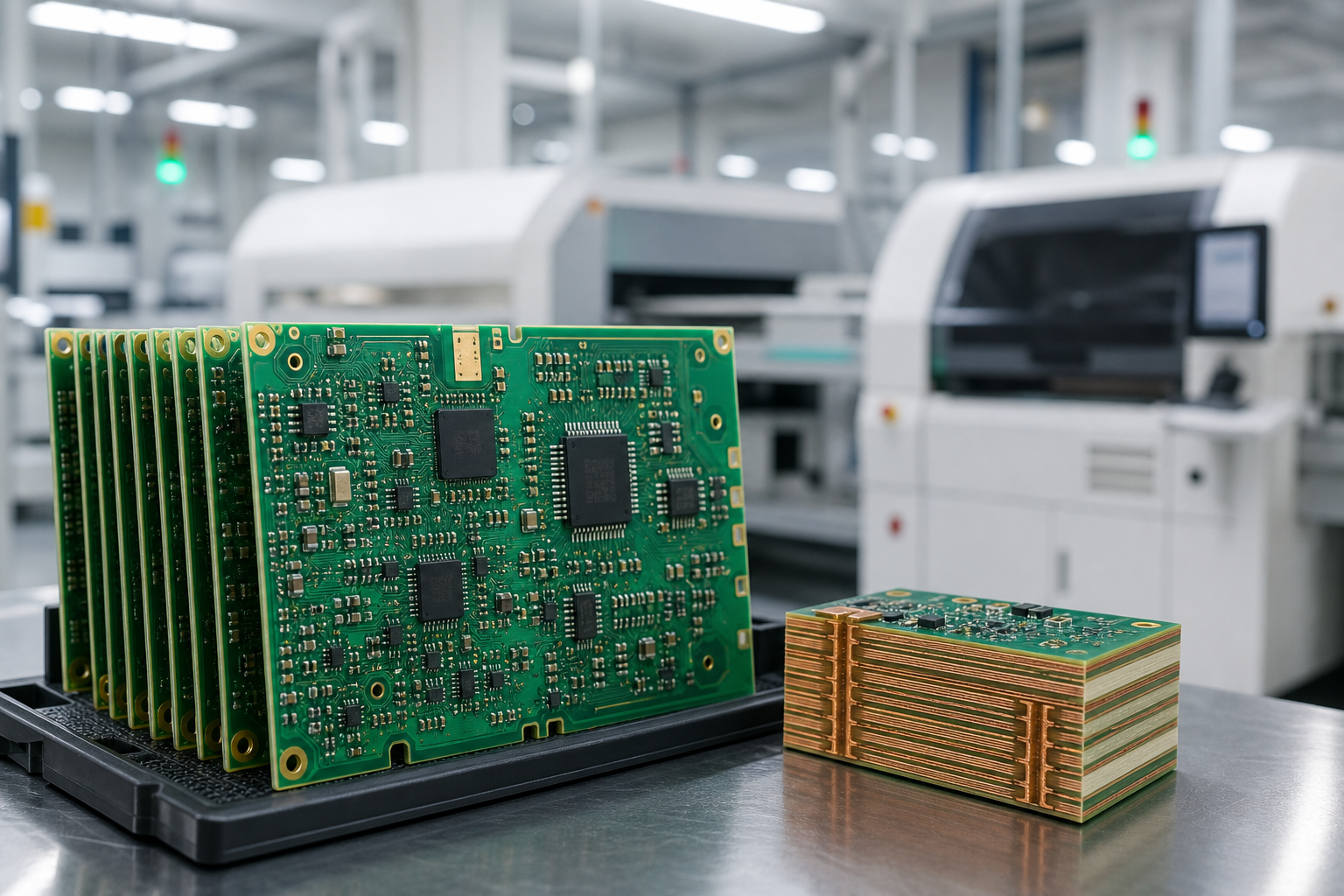
Multilayer PCB assembly is the PCBA workflow for boards with multiple internal copper layers, plated vias, dense routing, and often tighter electrical or mechanical constraints. Buyers should treat it as a combined bare-board, SMT, inspection, and test-control project because problems in stack-up, drilling, lamination, soldering, and cleaning can interact.
Why Buyers Should Confirm This Early
A multilayer board can look normal during prototype bring-up but still create production risk through via reliability, hidden inner-layer defects, thermal mass, impedance drift, insufficient solder wetting, connector stress, or hard-to-inspect joints. The RFQ should define the technical evidence needed before the supplier quotes volume pricing.
Buyer Checklist
| Check area | Buyer risk | Evidence to request | | --- | --- | --- | | Stack-up and via control | Layer count, copper balance, via type, and drill quality affect reliability. | Stack-up drawing, drill table, IPC class, and microsection expectations | | SMT process window | Uneven copper and component density can cause tombstoning, voiding, or insufficient wetting. | Stencil assumptions, reflow profile, paste type, and first article data | | Inspection coverage | Inner-layer and BGA or fine-pitch risks are not visible from a simple visual check. | AOI, X-ray where needed, ICT/FCT boundary, and defect criteria | | Release records | Buyers need lot-level proof when troubleshooting field issues. | Traveler, test report, inspection summary, and deviation log |
RFQ Questions to Ask
- Which layer count, copper weight, via structure, surface finish, and IPC acceptance class are assumed?
- How will the supplier confirm stack-up, drill quality, lamination, and plated-through-hole reliability before assembly?
- What SMT controls are planned for stencil design, reflow profile, component polarity, BGA or fine-pitch joints, and cleaning?
- Which inspection and test records will be returned with the first article and each production shipment?
Supplier Red Flags
- The quote gives unit price and lead time but does not define material, process, inspection, and test boundaries.
- Alternates, rework, deviations, failed tests, and lot traceability do not have an approval path.
- First article release, in-process inspection, outgoing QA, and nonconforming material handling are unclear.
- Critical promises are not backed by a record template that can be returned with the shipment.
How KEEP BEST Connects the Work
For this type of project, buyers should connect PCBA manufacturing services, quality management, DFM engineering review, RFQ review workflow, multilayer PCB material selection, 0201 and 01005 SMT assembly controls, PCB assembly SMT risk checklist, industry solution overview in one review path so quotation, engineering, quality, and delivery evidence stay aligned.
Practical Recommendation
Ask suppliers to quote multilayer PCB assembly with a documented release path. The strongest response should connect DFM, stack-up review, SMT process controls, inspection coverage, electrical test, functional test, and shipment records.
FAQ
Is multilayer PCB assembly only an SMT problem?
No. SMT is important, but the assembly result also depends on bare-board stack-up, drilling, lamination, plating, solder mask, surface finish, and cleaning.
When should X-ray inspection be requested?
Use X-ray when hidden solder joints, BGA packages, voiding risk, dense vias, or critical reliability requirements make visual inspection insufficient.
What should buyers compare before price?
Compare technical evidence, process controls, inspection coverage, test coverage, and change-control discipline before comparing unit price.