Direct Answer
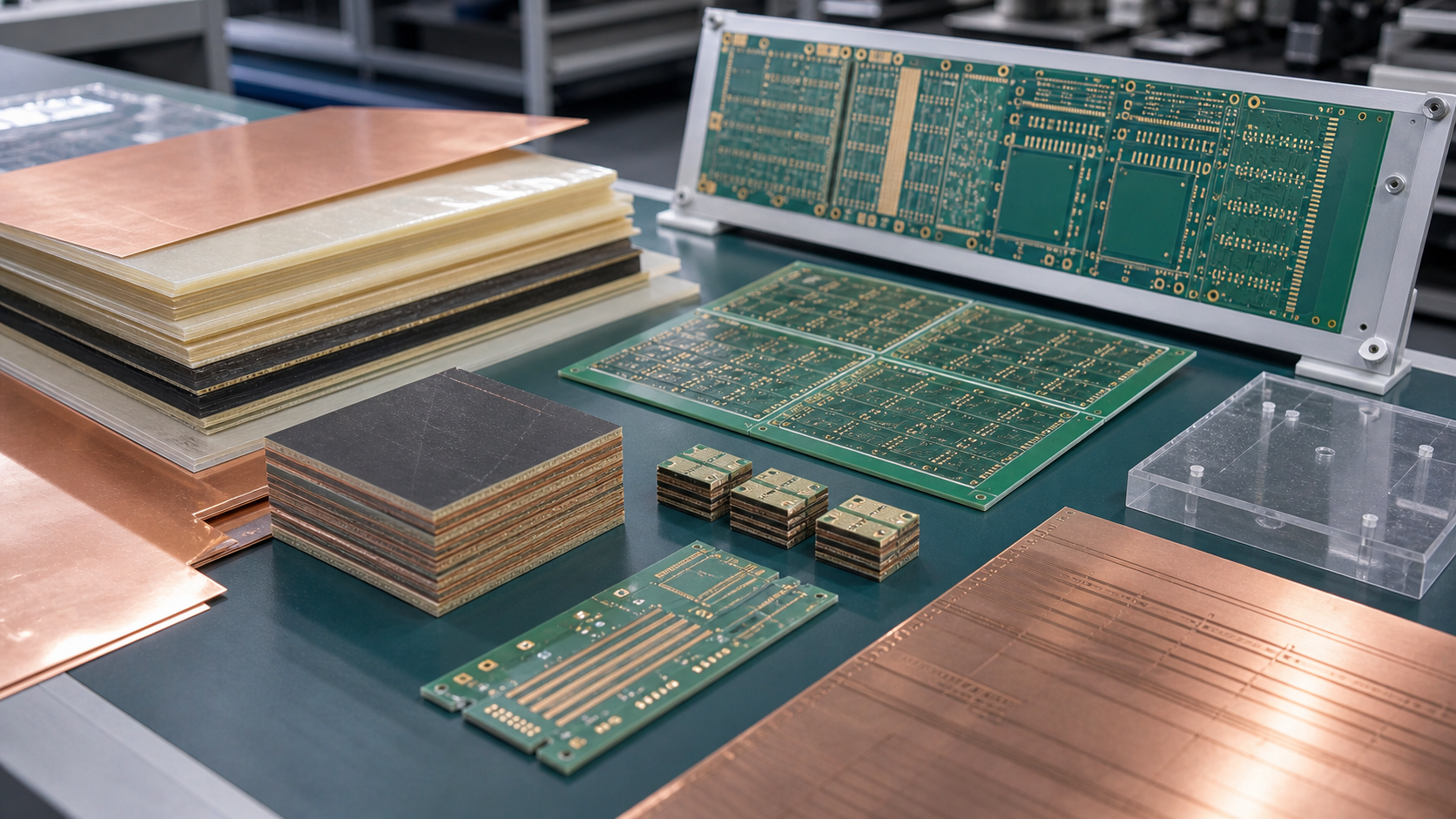
Multilayer PCB manufacturing builds circuit boards with three or more conductive layers laminated into one structure. Material selection matters because laminate, prepreg, copper distribution, drill quality, impedance control, and surface finish affect both bare-board yield and assembly reliability.
Why Buyers Should Confirm This Early
Many multilayer failures start before SMT assembly. Poor stack-up definition, unbalanced copper, unsuitable Tg, weak via reliability, or uncontrolled impedance can create warpage, delamination, intermittent failures, or soldering defects after components are mounted.
Buyer Checklist
| Check area | Buyer risk | Evidence to request | | --- | --- | --- | | Stack-up | Layer order and dielectric thickness define impedance and manufacturability. | Approved stack-up drawing and material list | | Material system | Tg, CTE, CAF resistance, and thermal behavior affect reliability. | Laminate and prepreg data | | Copper balance | Unbalanced copper can create warpage and assembly stress. | Copper distribution and panel review | | Drill and via quality | Via reliability affects electrical and thermal paths. | Drill table, plating spec, and inspection records |
RFQ Questions to Ask
- Which laminate, prepreg, Tg, copper thickness, and surface finish are included?
- Has the supplier reviewed impedance, copper balance, via structure, and lamination risk?
- What test coupons, microsection, electrical test, and outgoing inspection data will be provided?
- How will the SMT profile be adjusted for the board thickness and copper distribution?
Supplier Red Flags
- The quote gives unit price and lead time but does not define material, process, inspection, and test boundaries.
- Alternates, rework, deviations, failed tests, and lot traceability do not have an approval path.
- First article release, in-process inspection, outgoing QA, and nonconforming material handling are unclear.
- Critical process promises are verbal rather than backed by a record template that can be returned with the shipment.
How KEEP BEST Connects the Work
For this type of project, buyers should connect PCBA manufacturing services、DFM engineering review、quality management、RFQ review workflow、BGA material selection guide、370HR PCB material guide in one review path so quotation, engineering, quality, and delivery evidence stay aligned.
Practical Recommendation
For multilayer PCB sourcing, freeze the stack-up before price comparison. The best supplier response should connect material approval, impedance plan, fabrication controls, and assembly thermal profile into one reliability plan.
FAQ
How many layers count as multilayer PCB?
Any PCB with three or more conductive layers is generally considered multilayer, though most production designs use even layer counts.
Is higher Tg always better?
Not always. Tg is important, but the right material also depends on CTE, CAF resistance, dielectric needs, process history, and assembly temperature.
What should buyers check before SMT?
Check stack-up approval, flatness, via quality, surface finish, electrical test, and any material or impedance deviations.