
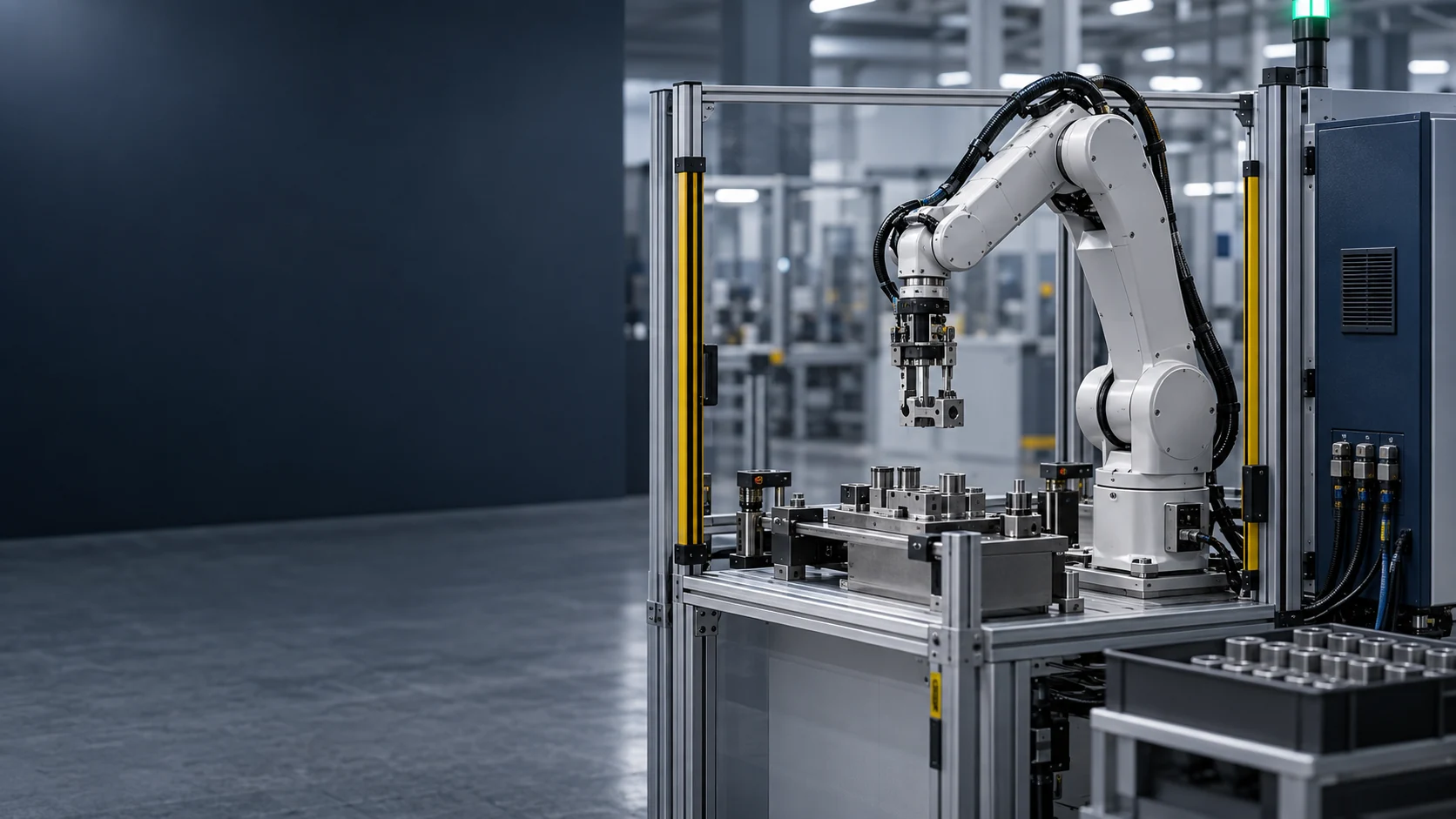
Industries · Industrial Automation & Robotics
Industrial electronics manufacturing for robotics and control systems
Industrial-control and robotics PCBAs often require explicit revision control, interface verification, lifecycle planning, mechanical-context review, test access and traceability decisions. Keep Best uses these inputs to review the appropriate NPI, sourcing, assembly and test route; sector suitability and environmental performance are not assumed.
Product context
Where industrial control and robotics projects fit.
The page focuses on revision continuity, interfaces, long-lifecycle sourcing and functional evidence without claiming generic sector outcomes.
- Revision continuity expectations across a long lifecycle
- Interface and mechanical context from the released design
- Test access and functional evidence you require
- No ruggedness or lifecycle outcome is assumed
Risk to decision
Translate product risks into manufacturing questions.
Interface stability, lifecycle planning and controlled change
| Risk topic | Your project inputs | How it is reviewed | Its boundary |
|---|---|---|---|
| Revision continuity | How long the design must stay buildable | Change and sourcing controls reviewed | No lifecycle guarantee without terms |
| Interfaces | Connectors, signals and mechanical fit | Assembly and verification review | System-validation responsibility follows the agreed work package |
| Test access | Points and fixtures in the design | Method applicability per board | Coverage is project-defined |
| Traceability | Record depth for field support | A record model agreed per program | Depth follows the agreed scope |
Product risks
Control electronics for demanding environments
What long lifecycles and interfaces change in the plan.
Supporting context
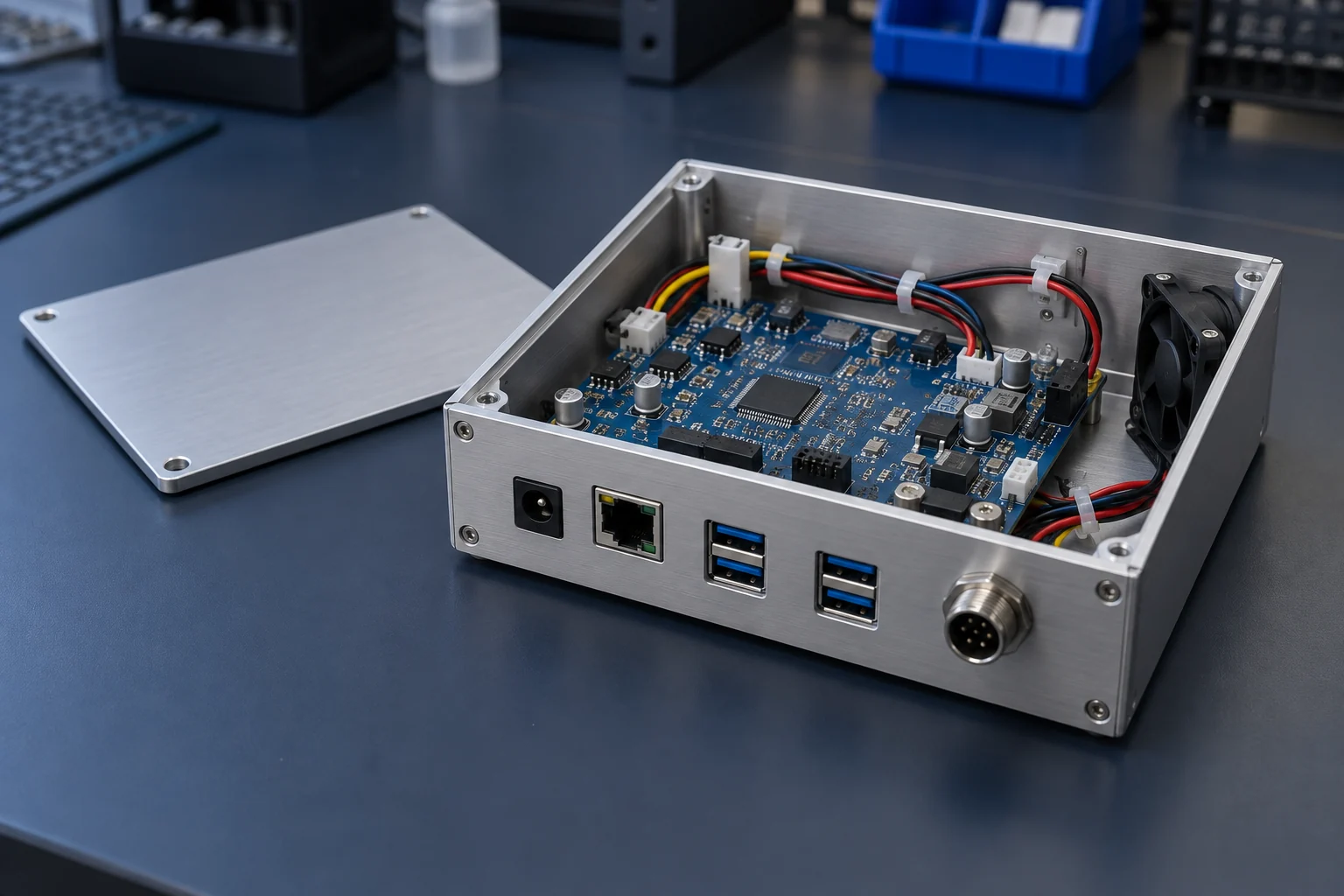
- Control and robotics board context
- Imagery shows application context, not field results
- Suitability follows the project review
Relevant EMS path
Connect lifecycle risks to the work packages.
Risk review, route planning, method definition and release conditions follow the product.
Risk review
Lifecycle, interface and environment inputs mapped
Route planning
NPI, sourcing and assembly sequence confirmed
Method definition
Test and traceability scope agreed
Release conditions
What must hold before repeat production
Evidence implications
Define controller test and traceability around the program.
Sector relevance does not establish suitability or coverage.
Planning route
Continue into the industrial control evidence.
The robot-controller example, NPI route and DFM checklist.
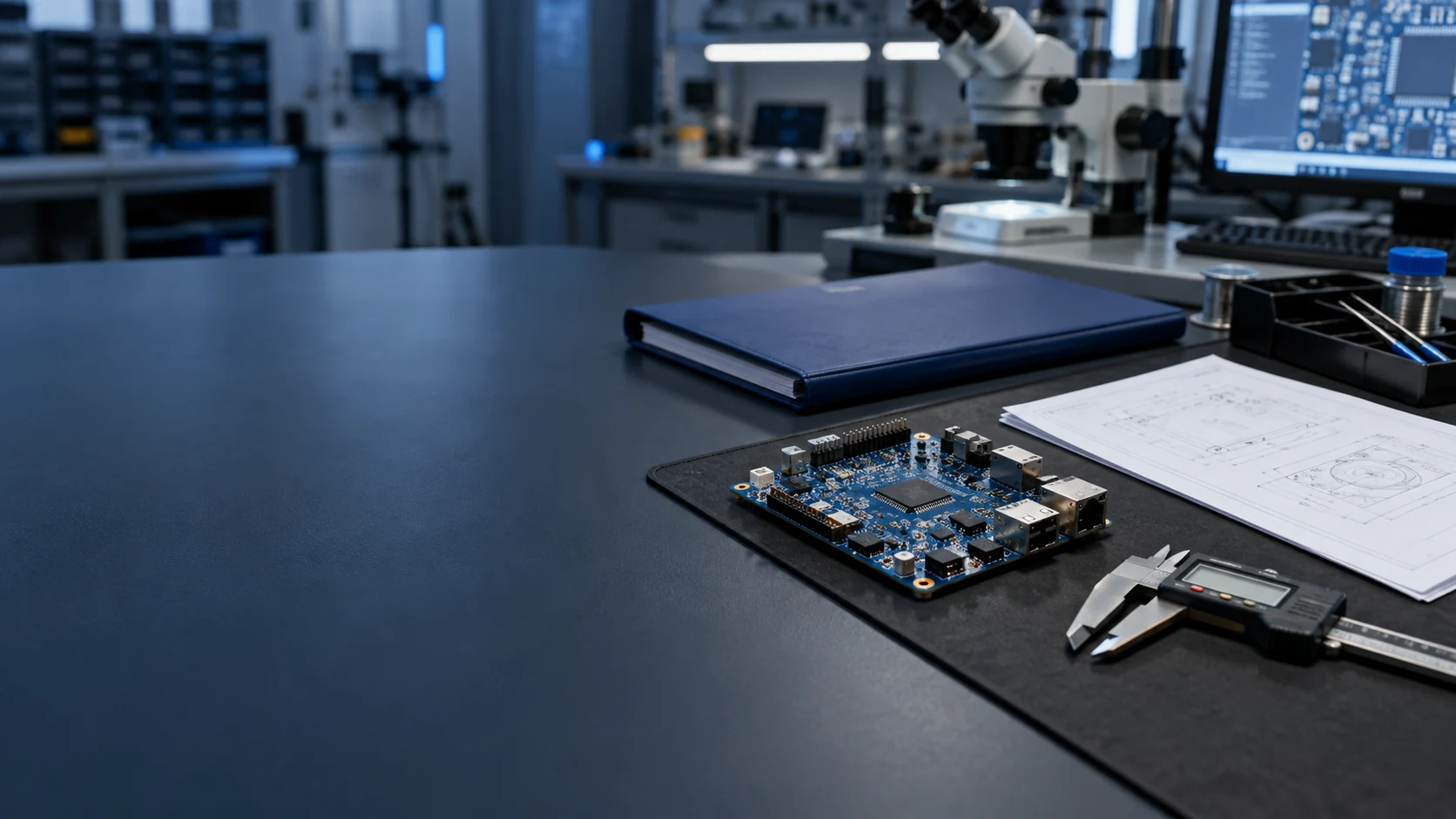
Featured
Review the robot-controller example, the NPI route for industrial hardware and the DFM checklist.
- A robot-controller example with conditions
- The NPI route for long-lifecycle hardware
- The DFM checklist to prepare the review
Industrial control questions
Questions long-lifecycle controller programs raise.
Suitability answers follow the project review, not sector labels.
How is a long-lifecycle design kept buildable?
Can the interfaces our mechanical assembly depends on be verified?
What if the controller must survive harsh environments?
Next step
Related services and practical guides
Explore the next step for your project.
Start a conversation
Discuss an industrial control PCBA project
Tell us what you need to build or the question you would like to discuss. Our team will help define the next step.
We can sign a non-disclosure agreement before discussing sensitive designs. Your project information and files are handled confidentially.