
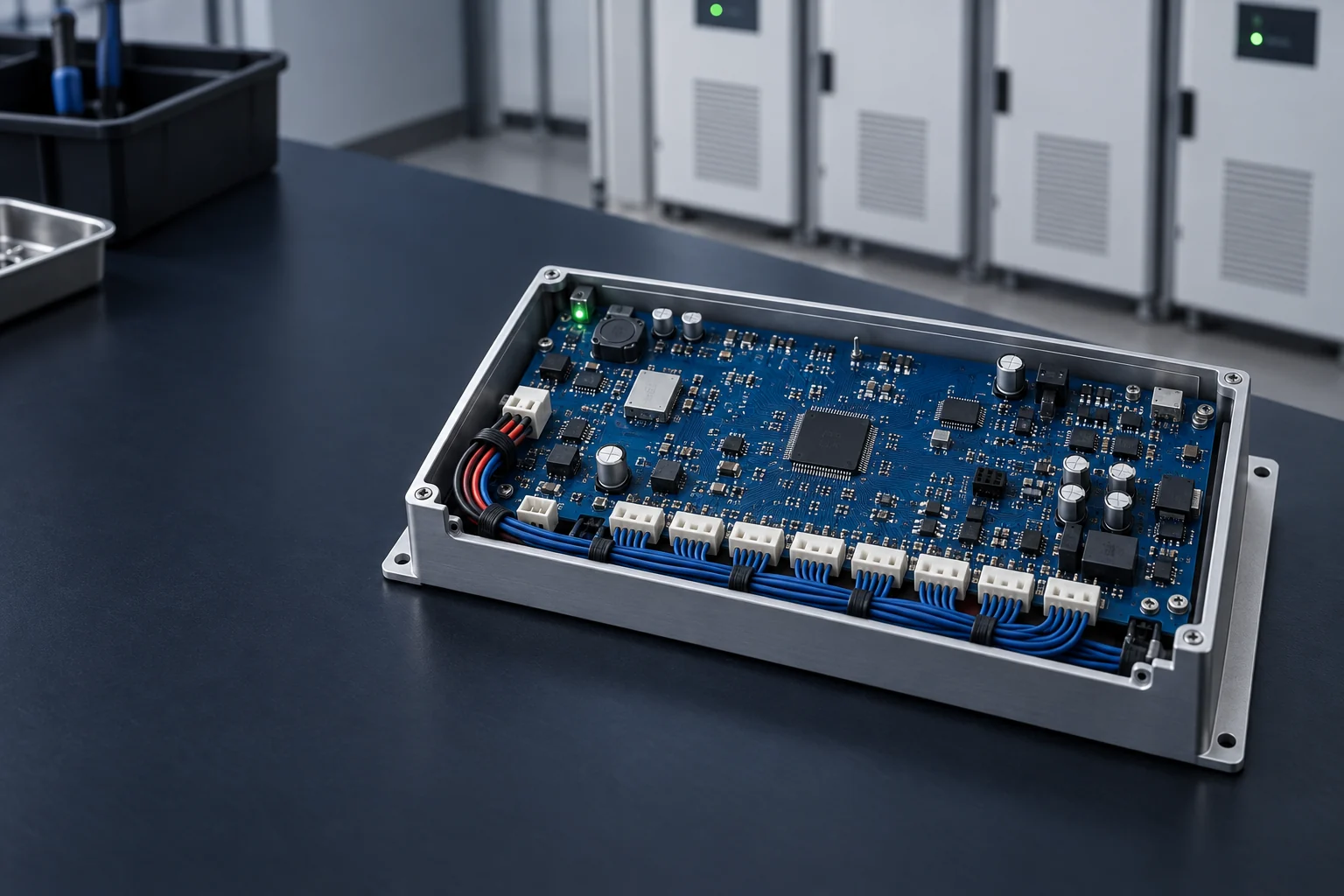
Industries · Power Electronics & Energy Storage
Energy storage electronics manufacturing for power-conversion products
Power-electronics and energy-storage hardware can introduce high-current, thermal, component, insulation, process and system-test questions. Keep Best reviews those project inputs before confirming sourcing, PCBA, testing or integration work. Regulatory responsibility, electrical safety and performance remain specific to each product, site and program.
Product context
Where power electronics and energy storage projects fit.
The page focuses on electrical safety, thermal decisions, high-current interfaces and validation planning without claiming generic sector outcomes.
- Electrical, thermal and safety inputs for the hardware
- High-current and insulation considerations stated early
- Validation expectations and who owns them
- No compliance or performance promise is implied
Risk to decision
Translate product risks into manufacturing questions.
Electrical, thermal and safety-related manufacturing inputs
| Risk topic | Your project inputs | How it is reviewed | Its boundary |
|---|---|---|---|
| Electrical stress | Current, voltage and insulation context | Process and sourcing review | No electrical-safety certification implied |
| Thermal decisions | Heat paths and component limits | Reviewed as assembly inputs | Thermal-design responsibility follows the agreed work package |
| Material controls | Critical parts and alternates rules | Sourcing review with traceability | No supply assurance without approval |
| Validation | Test and evidence expectations | Scope agreed per program | Safety ownership remains explicit |
Product risks
Assembly considerations for power hardware
What electrical and thermal stress changes in the plan.
Supporting context
- Power and energy hardware context
- Imagery shows application context, not certification
- Regulatory responsibility stays product-specific
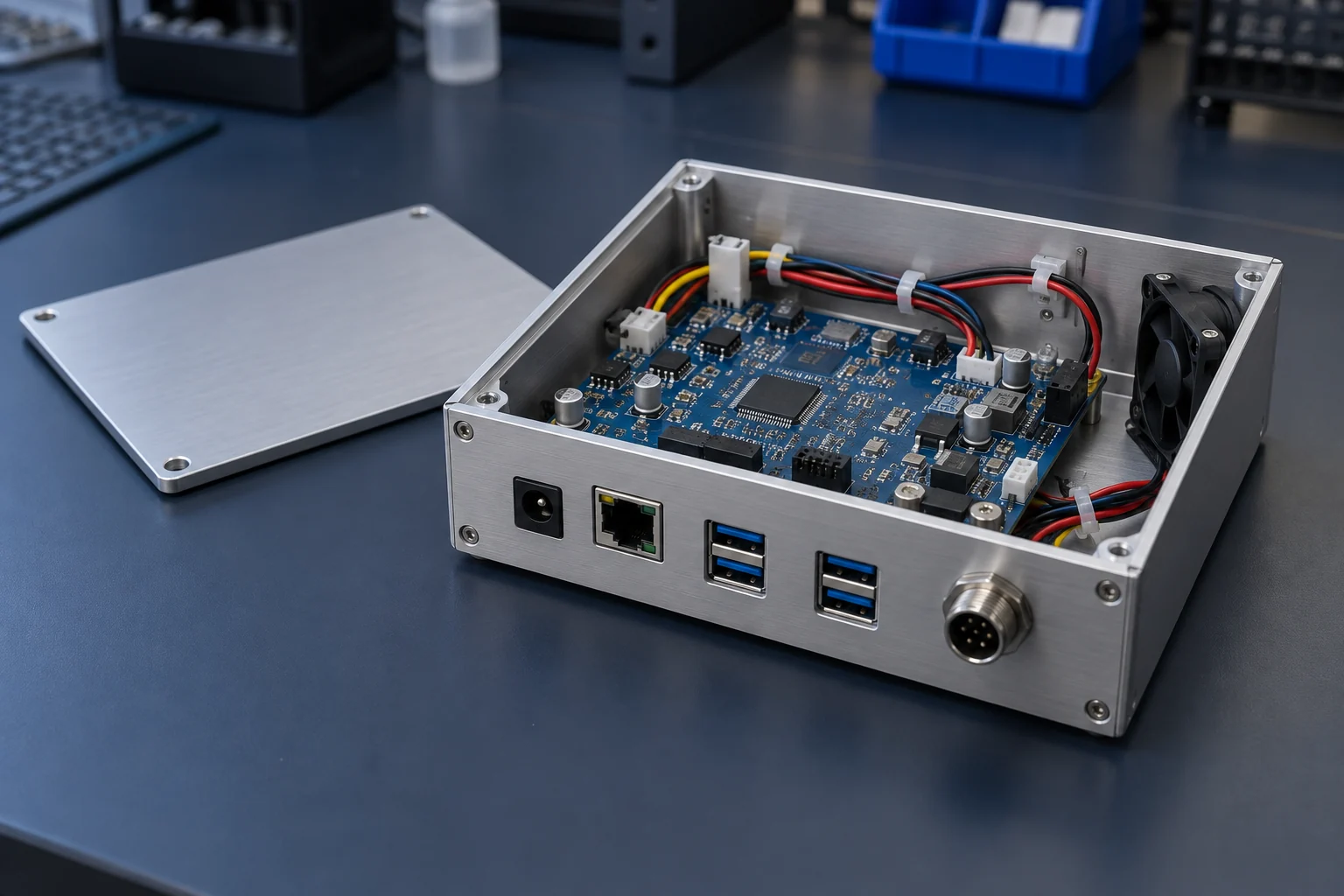
Relevant EMS path
Connect electrical and thermal inputs to the work packages.
Input review, route planning, validation scope and release conditions follow the hardware.
Input review
Electrical, thermal and safety inputs mapped
Route planning
Sourcing, assembly and integration sequence
Validation scope
Test and evidence agreed per program
Release conditions
What must hold before production
Evidence implications
Define validation and test evidence around the program.
Application relevance does not establish compliance or coverage.
Planning route
Continue into the power and energy evidence.
The energy examples, integration path and transfer checklist.
Featured
Review the related examples, the integration path and the BMS transfer checklist.
- Power and energy case examples with limits
- The integration path for power products
- The transfer checklist for energy programs
Power and energy questions
Questions power and energy-storage programs raise.
Regulatory ownership and process answers stay program-specific.
Who owns safety certification for energy-storage products?
How are high-current boards handled differently?
Can the controller and the power stage be built together?
Next step
Related services and practical guides
Explore the next step for your project.
- Review sourcing controls for power electronics
- Review final integration for power products
- Review the product-development path
- Review BMS development responsibilities
- Review development support before manufacturing release
- Review a related energy-storage example
- Prepare energy-storage hardware for transfer
Start a conversation
Discuss a power or energy-storage PCBA
Tell us what you need to build or the question you would like to discuss. Our team will help define the next step.
We can sign a non-disclosure agreement before discussing sensitive designs. Your project information and files are handled confidentially.