
Direct Answer
SMT PCB assembly converts bare boards, solder paste, and surface-mount components into repeatable PCBAs through stencil printing, placement, reflow, inspection, and test. The main buyer risk is not a single defect type; it is weak control of design inputs, paste printing, placement accuracy, thermal profile, component handling, inspection coverage, and change approval. A good RFQ should therefore ask for process evidence, not only a unit price.
What the SMT Flow Should Control
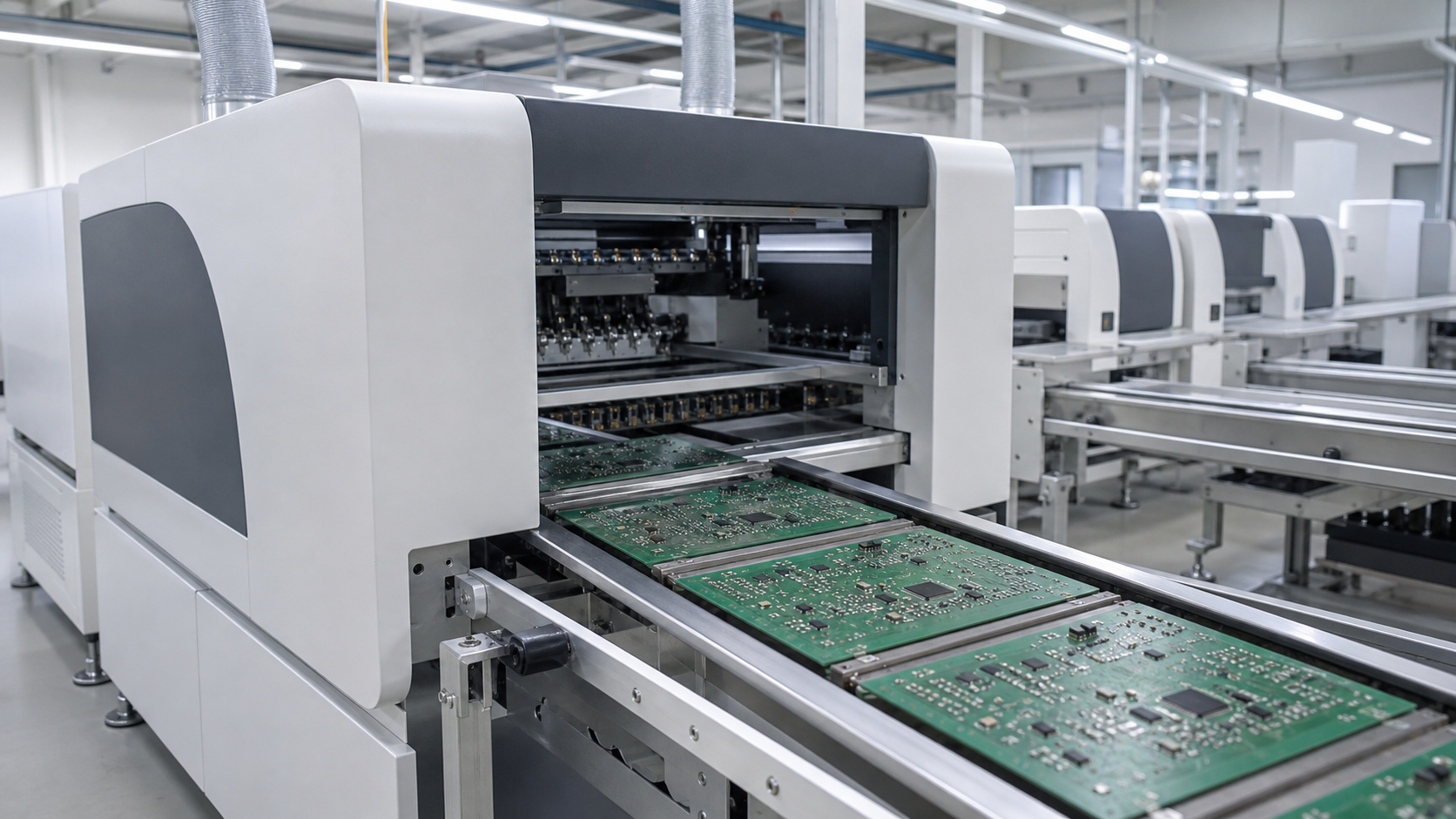
The practical SMT flow is design review, panel and stencil planning, solder paste printing, SPI, component placement, reflow, AOI, X-ray where hidden joints are present, rework control, ICT or FCT, final inspection, packaging, and traceable release. Each step can be technically correct by itself and still fail if the handoff between steps is vague.
IPC's IPC-A-610 standard page frames electronic assembly acceptance around finished assembly requirements. The process side is typically aligned with soldering and process-control expectations such as IPC J-STD-001. Buyers do not need to quote the whole standard in an RFQ, but they should define which workmanship and acceptance criteria govern the build.
Common SMT Process Risks
| Risk area | Typical symptom | Buyer control | |---|---|---| | DFM gaps | Tombstoning, bridging, insufficient solder, inaccessible test points | Closed DFM report before release | | Stencil and paste | Volume variation, slump, blocked apertures | Stencil design review and SPI data | | Placement | Skew, wrong rotation, missing parts, polarity mistakes | Feeder setup control and first article approval | | Reflow profile | Voids, opens, component stress, poor wetting | Product-specific profile record | | Hidden joints | BGA or bottom-terminated defects | X-ray or validated test coverage | | Change control | Unapproved parts, board revision drift, process changes | Written ECO and lot traceability |
Inspection Points Buyers Should Ask About
The minimum inspection plan should show where the supplier checks paste volume, component identity, placement, solder joints, polarity, board cleanliness, rework, programming, functional test, and outgoing quality. The plan should be tied to the actual board design. A simple resistor board and a dense mixed-technology controller do not need the same inspection coverage.
For complex projects, link the SMT plan with DFM engineering, PCBA manufacturing, quality management, RFQ review, OEM manufacturing, box build integration, and the 0201 and 01005 SMT assembly guide.
RFQ Questions for an SMT Supplier
- Will you review pad geometry, stencil design, fiducials, panel rails, and test access before quoting production?
- Which solder paste, stencil thickness, aperture rules, and cleaning assumptions are included?
- How will first article inspection connect BOM, placement, polarity, and reflow records?
- Which parts require moisture-sensitive handling, baking, dry storage, or exposure tracking?
- What AOI, SPI, X-ray, ICT, and FCT coverage will be applied to this design?
- How are rework limits, process deviations, and engineering changes approved?
- Can the release package connect component lots, board lots, test results, and shipment records?
Practical Recommendation
Ask for a short process-control matrix before approving the order. It should list each SMT step, the defect it controls, the inspection method, the acceptance rule, and the record the buyer will receive. This prevents the RFQ from becoming a price-only comparison and gives the supplier a clear target for stable PCBA production.
FAQ
Is SMT PCB assembly only about placing components?
No. Placement is one step. Reliable SMT assembly also depends on stencil design, solder paste control, reflow profiling, inspection, rework discipline, test coverage, and traceability.
Does AOI replace functional testing?
No. AOI checks visible assembly conditions. Functional testing checks whether the assembled product performs as intended.
When is X-ray inspection needed?
It is commonly used for hidden solder joints such as BGA, QFN, LGA, and other bottom-terminated packages where visual inspection cannot see the joint.
What should be frozen before mass production?
Freeze the BOM, PCB revision, placement data, stencil, approved alternates, test limits, reflow profile, packaging rule, and change-control path.