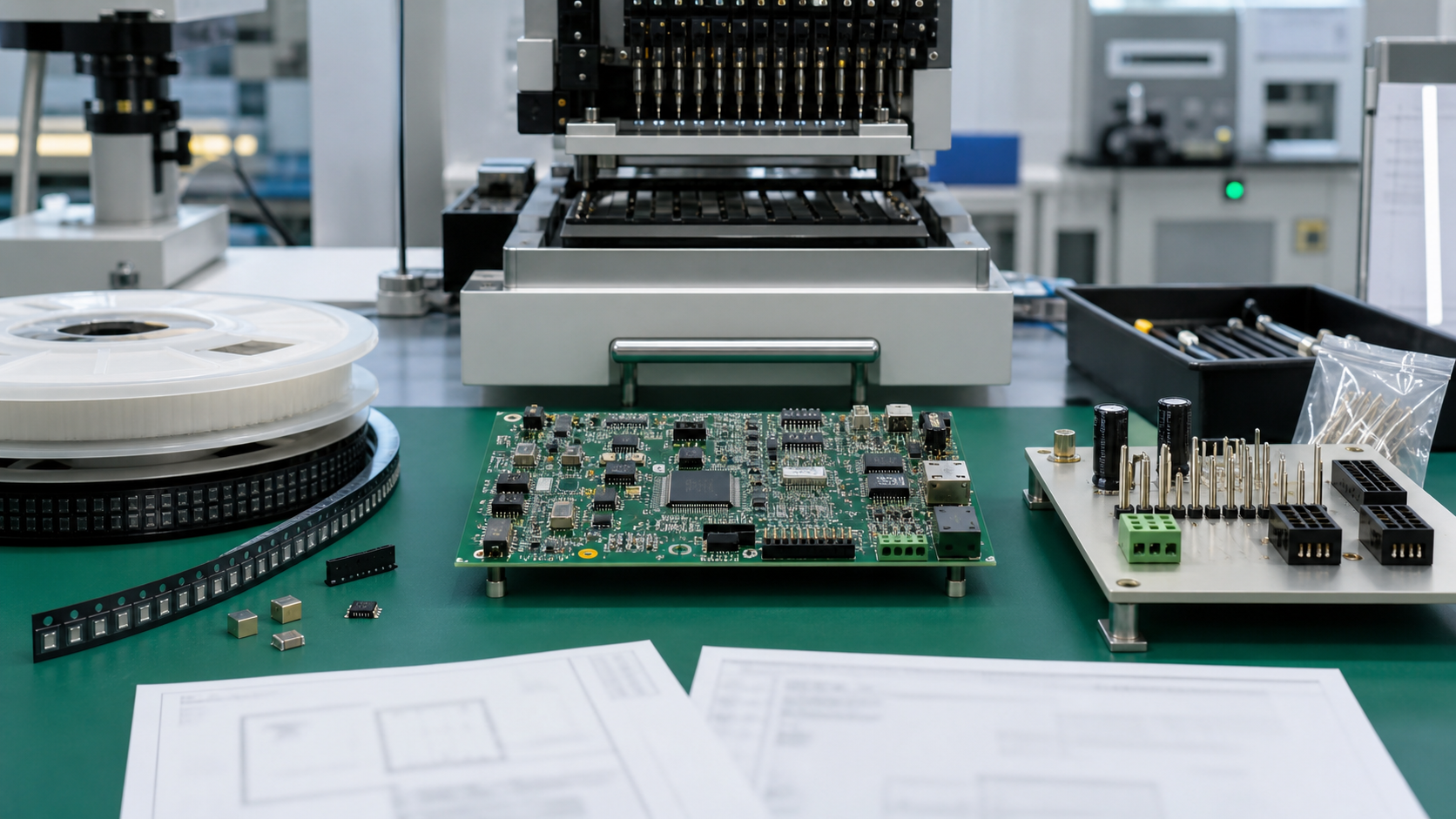
Direct Answer
SMT vs through hole is not a simple modern-versus-legacy choice. SMT is usually better for compact, high-density, automated PCBA assembly, while through-hole assembly is still useful for connectors, terminals, transformers, high-stress parts, and components that need stronger mechanical retention. Many industrial and medical electronics use both technologies on one board, so buyers should evaluate the process route, inspection plan, and test evidence before comparing unit price.
Why Buyers Should Confirm This Early
The wrong assembly choice can create solder joint fatigue, tombstoning, insufficient hole fill, thermal imbalance, connector stress, rework limits, or inspection blind spots. These problems often appear after the first prototype because volume production adds panel handling, selective soldering, wave soldering, fixture design, cleaning, and repeated thermal exposure.
Buyer Checklist
| Check area | Buyer risk | Evidence to request | | --- | --- | --- | | Assembly mix | SMT and through-hole parts may need different soldering, fixture, and inspection routes. | BOM classification, mixed-technology process flow, and no-clean or cleaning assumptions | | Mechanical stress | Connectors, terminals, switches, and large parts can fail if only solder joint strength is considered. | Connector retention plan, mounting support, strain relief, and field-use assumptions | | Soldering process | Reflow, selective soldering, wave soldering, and hand soldering each create different risks. | Thermal profile, solder method, hole-fill criteria, masking plan, and rework boundary | | Inspection and test | AOI may not see hidden joints, underside pads, or barrel fill problems. | AOI scope, X-ray or microscope plan where needed, ICT/FCT coverage, and first article evidence |
RFQ Questions to Ask
- Which parts are planned for SMT, which parts are through-hole, and which parts need special mechanical support?
- Will the supplier use reflow plus selective soldering, wave soldering, hand soldering, or a different mixed-assembly route?
- What are the acceptance criteria for solder fillet, barrel fill, wetting, polarity, component height, and connector alignment?
- Which AOI, X-ray, microscope, ICT, FCT, and first article records will be returned before production release?
- What rework limits apply to connectors, large thermal-mass parts, fine-pitch SMT parts, and conformal coating or cleaning steps?
Supplier Red Flags
- The quote gives SMT or through-hole pricing but does not define mixed-assembly sequence, soldering method, fixtures, and rework boundaries.
- Connectors, terminals, high thermal-mass parts, or high-stress parts do not have a mechanical retention and inspection plan.
- First article release, in-process inspection, ICT/FCT, nonconforming material handling, and lot traceability are unclear.
- The supplier cannot explain how selective soldering, wave soldering, hand soldering, or cleaning affects nearby SMT components.
How KEEP BEST Connects the Work
For this type of project, buyers should connect PCBA manufacturing services, DFM engineering review, quality and traceability controls, RFQ review workflow, 0201 and 01005 SMT assembly guide, PCB assembly SMT risk checklist, SMT PCB assembly risk review, selective soldering for through-hole PCBA in one review path so quotation, engineering, quality, and delivery evidence stay aligned.
Practical Recommendation
For a mixed PCBA, ask the supplier to quote SMT and through-hole assembly as one controlled process package. The useful RFQ response should show the BOM split, process route, fixture needs, inspection coverage, test coverage, and records that will be returned with the shipment.
FAQ
Is SMT always better than through hole?
No. SMT is usually better for density and automation, but through-hole parts can be better for high mechanical stress, large connectors, terminals, and some power components.
Can one PCBA use both SMT and through-hole assembly?
Yes. Mixed-technology PCBAs are common. The key is to define process sequence, soldering method, inspection access, and rework boundaries before production.
What should buyers ask for in an RFQ?
Ask for the BOM split, soldering route, fixture plan, inspection criteria, ICT or FCT scope, first article records, and lot traceability records.