Direct Answer
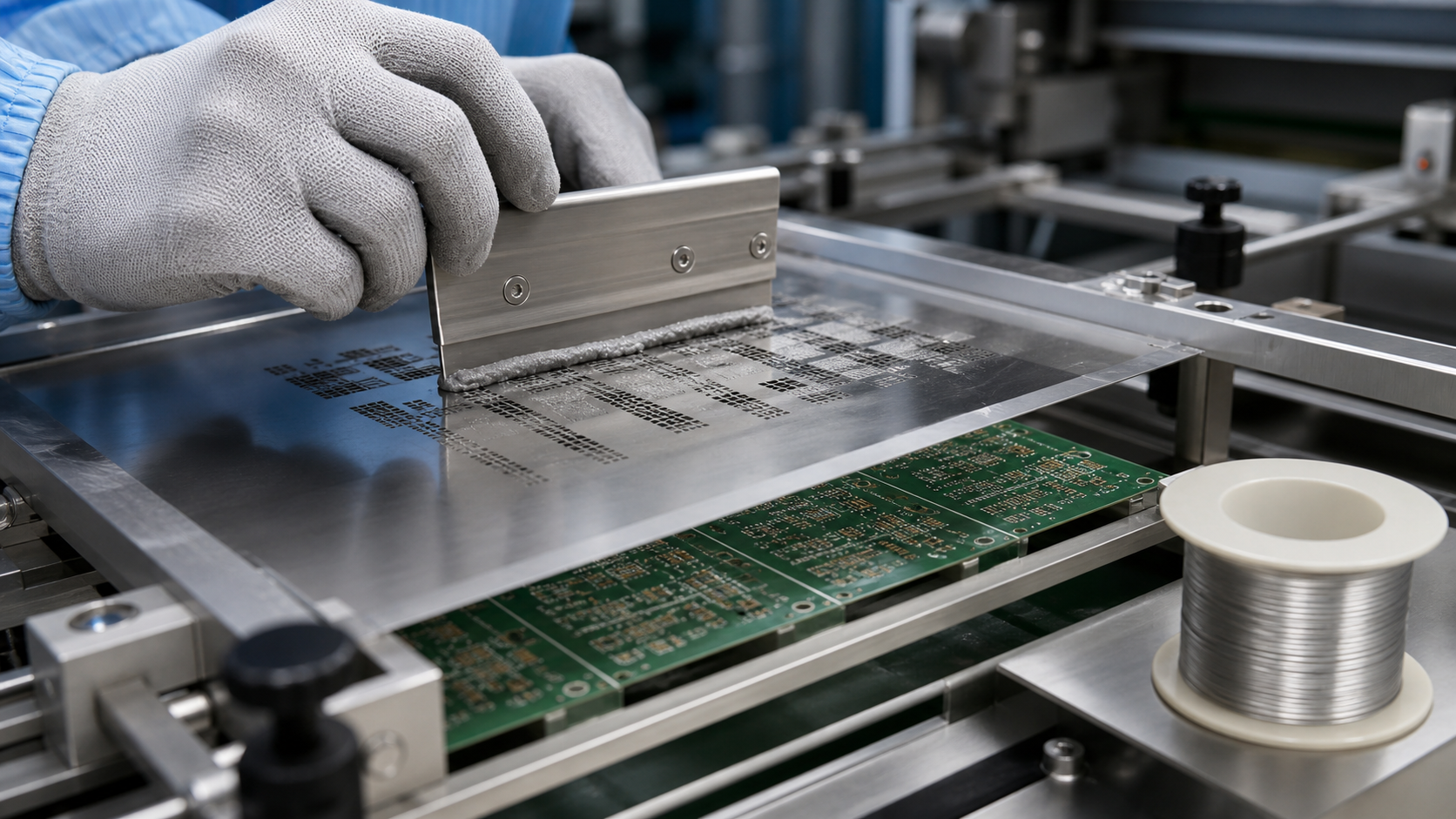
Solder paste and solder wire are not interchangeable in SMT production. Paste is the controlled material for stencil printing and reflow soldering, while wire is mainly used for hand soldering, rework, touch-up, or selected through-hole work. Buyers should ask how each material is stored, applied, inspected, and limited.
Why Buyers Should Clarify This Early
Many solder defects are not caused by placement alone. Paste handling, stencil release, paste volume, reflow profile, flux activity, wire diameter, operator touch-up, and cleaning rules can all change solder joint reliability. RFQ language should separate SMT production controls from rework controls.
Buyer Checklist
| Check area | What buyers should confirm | Evidence or action | | --- | --- | --- | | Material use | Solder paste | Solder wire | | Main process | Stencil printing and reflow | Hand soldering, touch-up, rework | | Key controls | Cold storage, shelf life, thaw time, stencil aperture, reflow profile | Alloy, flux core, wire diameter, tip temperature, operator limits | | Inspection focus | Paste volume, bridging, tombstoning, voiding, solder wetting | Excess solder, lifted pads, heat damage, flux residue |
RFQ Questions to Ask
- Which solder paste alloy, flux type, and storage limits will be used for the build?
- How are stencil apertures, paste volume, and reflow profiles validated before pilot run?
- When is solder wire allowed, and who approves touch-up or rework?
- Which inspection method covers bridges, voids, insufficient solder, and flux residue?
Supplier Red Flags
- The quote only lists unit price and lead time, without process boundaries, test boundaries, or document scope.
- DFM issues, approved alternates, rework, deviations, and lot traceability do not have a clear approval path.
- The supplier cannot explain who owns first article review, in-process inspection, failed-unit handling, and release records.
- Critical materials, critical process steps, or critical tests are promised verbally but not tied to a record template.
Documents to Prepare Before RFQ
Prepare controlled versions of PCB data, BOM, drawings, test limits, packaging requirements, approved alternates, special process notes, and the target release-record list. Clear inputs make supplier capability differences visible earlier and help close risk before pilot production.
How KEEP BEST Connects the Work
For a controlled build, connect PCBA manufacturing services, DFM engineering review, quality management, RFQ review workflow, 0201 and 01005 SMT assembly, SMT PCB assembly risk guide in one review path so quotation, engineering, quality, and delivery evidence stay aligned.
Practical Recommendation
Treat solder wire usage as a controlled exception in SMT builds. Ask the supplier to define the allowed locations, operator qualification, inspection method, and rework record.
FAQ
Can solder wire replace solder paste for SMT?
No. SMT relies on controlled paste deposition and reflow. Wire may support touch-up or rework, but it is not a substitute for stencil printing.
What is the main RFQ risk?
The main risk is vague rework permission. If wire touch-up is unrestricted, process variation and hidden solder-joint damage can increase.
Should buyers ask for reflow data?
Yes. Reflow profile, paste handling records, and inspection evidence should be part of the process package for critical builds.