Direct Answer
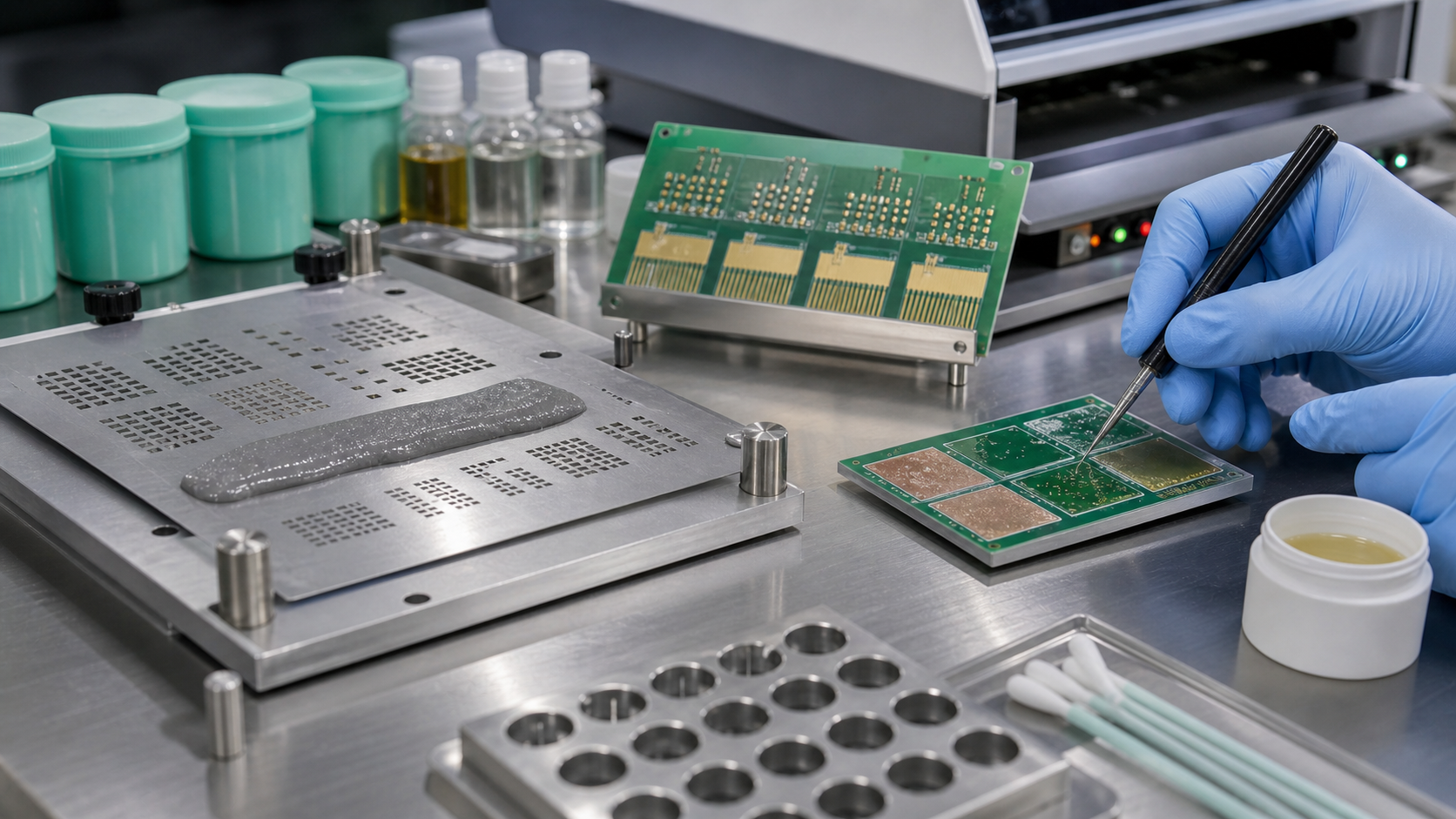
Solder paste is not the same as flux. Solder paste contains solder alloy powder plus flux chemistry, while standalone flux is used to promote wetting and remove oxides during soldering. In SMT production, buyers should control paste alloy, flux type, storage, stencil printing, reflow profile, cleaning, and inspection evidence together.
Why Buyers Should Clarify This Early
Confusing paste and flux leads to weak RFQ language. A supplier may quote acceptable assembly work but leave open questions about paste handling, flux residues, cleaning requirements, ionic contamination risk, or rework rules. These details matter for fine-pitch parts, BGA packages, high-reliability builds, and boards that will face humidity or thermal stress.
Buyer Checklist
| Check area | Buyer focus | Evidence | | --- | --- | --- | | Item | Solder paste | Flux | | Composition | Solder powder plus flux system | Chemical wetting and oxide-removal medium | | Main SMT role | Stencil printing and reflow joint formation | Wetting support, rework, selective soldering, or process chemistry | | Buyer risk | Shelf life, thaw time, paste volume, voiding, bridging | Residue, cleaning rule, compatibility, corrosion risk | | Evidence to request | Paste spec, storage log, reflow profile, SPI/AOI data | Flux type, residue rule, cleaning validation, inspection criteria |
RFQ Questions to Ask
- Which solder paste alloy and flux activity level will be used?
- How are paste storage, thaw time, stencil life, and opened-jar life controlled?
- Will the build require no-clean, water-soluble, or cleaning-validated chemistry?
- What inspection covers flux residue, solder wetting, bridging, and voiding?
Supplier Red Flags
- The quote only lists price and lead time, without material, process, inspection, and test boundaries.
- Approved alternates, rework, deviations, test failures, and lot traceability do not have a clear approval path.
- The supplier cannot explain who owns first article review, in-process inspection, release records, and failed-unit handling.
- Critical process promises are verbal only and are not tied to a record template.
How KEEP BEST Connects the Work
For a controlled build, connect PCBA manufacturing services, DFM engineering review, quality management, RFQ review workflow, SMT PCB assembly risk guide, solder paste vs wire comparison in one review path so quotation, engineering, quality, and delivery evidence stay aligned.
Practical Recommendation
Ask the supplier to separate paste-control evidence from flux and cleaning evidence. This makes the process easier to audit and avoids hidden reliability assumptions.
FAQ
Can solder paste work without flux?
No. Paste contains flux chemistry. The practical question is which flux system is inside the paste and how residues are controlled.
Is no-clean flux always safe to leave on the board?
No. No-clean does not mean no risk. Residue acceptability depends on product environment, spacing, voltage, and cleanliness requirements.
What should buyers add to the RFQ?
Add paste specification, storage control, cleaning rule, inspection criteria, and rework approval requirements.