Direct Answer
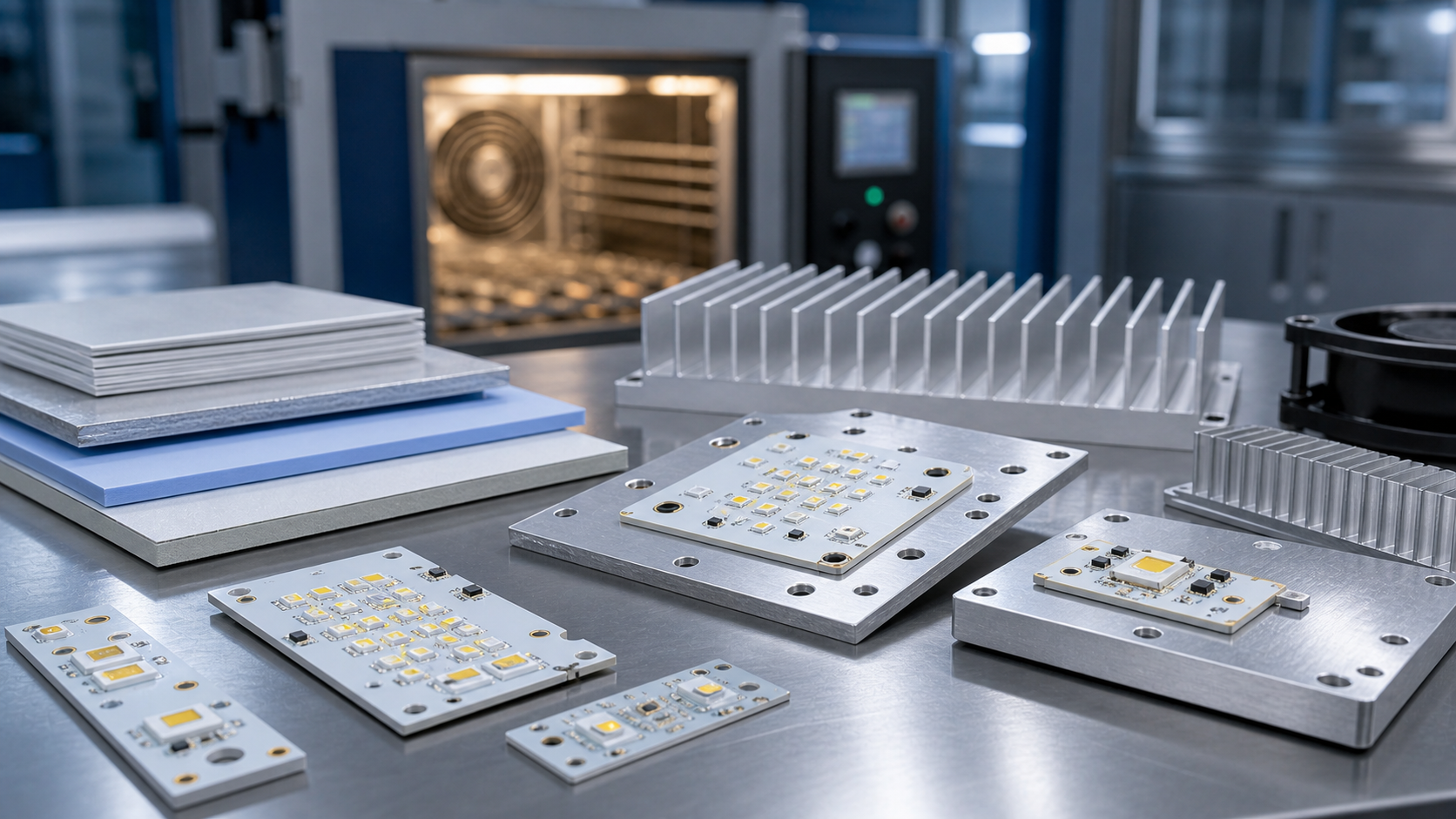
Alu PCB usually refers to an aluminum-core PCB built for heat dissipation in LED lighting, power modules, motor control, and other thermal applications. Its performance depends on the aluminum base, dielectric layer, copper circuit, surface finish, and assembly process working together.
Why Buyers Should Confirm This Early
Aluminum boards can look simple, but material decisions affect thermal resistance, insulation strength, soldering behavior, flatness, and field reliability. Buyers should define the thermal and electrical target before asking suppliers to quote a generic aluminum PCB.
Buyer Checklist
| Check area | Buyer risk | Evidence to request | | --- | --- | --- | | Thermal dielectric | Thermal resistance and insulation depend on this layer. | Thermal conductivity, breakdown voltage, and thickness | | Copper thickness | Current carrying and heat spreading need enough copper. | Copper weight and current path review | | Surface finish | Solderability and storage life depend on finish choice. | Finish type, shelf life, and process limit | | Assembly control | Thermal mass affects solder profile and component stress. | Reflow profile, fixture plan, and inspection record |
RFQ Questions to Ask
- What thermal conductivity, dielectric thickness, and breakdown voltage are included?
- Is the copper thickness adequate for current, heat spreading, and solder joint reliability?
- How will the supplier control board flatness, burrs, and insulation after fabrication?
- Will the assembly process include thermal profile verification for aluminum-core boards?
Supplier Red Flags
- The quote gives unit price and lead time but does not define material, process, inspection, and test boundaries.
- Alternates, rework, deviations, failed tests, and lot traceability do not have an approval path.
- First article release, in-process inspection, outgoing QA, and nonconforming material handling are unclear.
- Critical process promises are verbal rather than backed by a record template that can be returned with the shipment.
How KEEP BEST Connects the Work
For this type of project, buyers should connect PCBA manufacturing services、DFM engineering review、quality management、RFQ review workflow、EV high temperature PCB guide、370HR PCB material guide in one review path so quotation, engineering, quality, and delivery evidence stay aligned.
Practical Recommendation
For aluminum PCB RFQs, quote the thermal target and assembly risk together. A credible supplier should connect material data, heat path review, SMT process settings, and outgoing inspection evidence.
FAQ
Is Alu PCB always better for heat dissipation?
It is useful for many thermal designs, but the benefit depends on the dielectric layer, copper design, enclosure, and overall heat path.
Can aluminum PCB be used for double-sided circuits?
Yes, but the structure, insulation, and manufacturing method must be confirmed early.
What should buyers compare first?
Compare dielectric performance, copper thickness, flatness control, surface finish, and assembly process evidence before comparing unit price.