
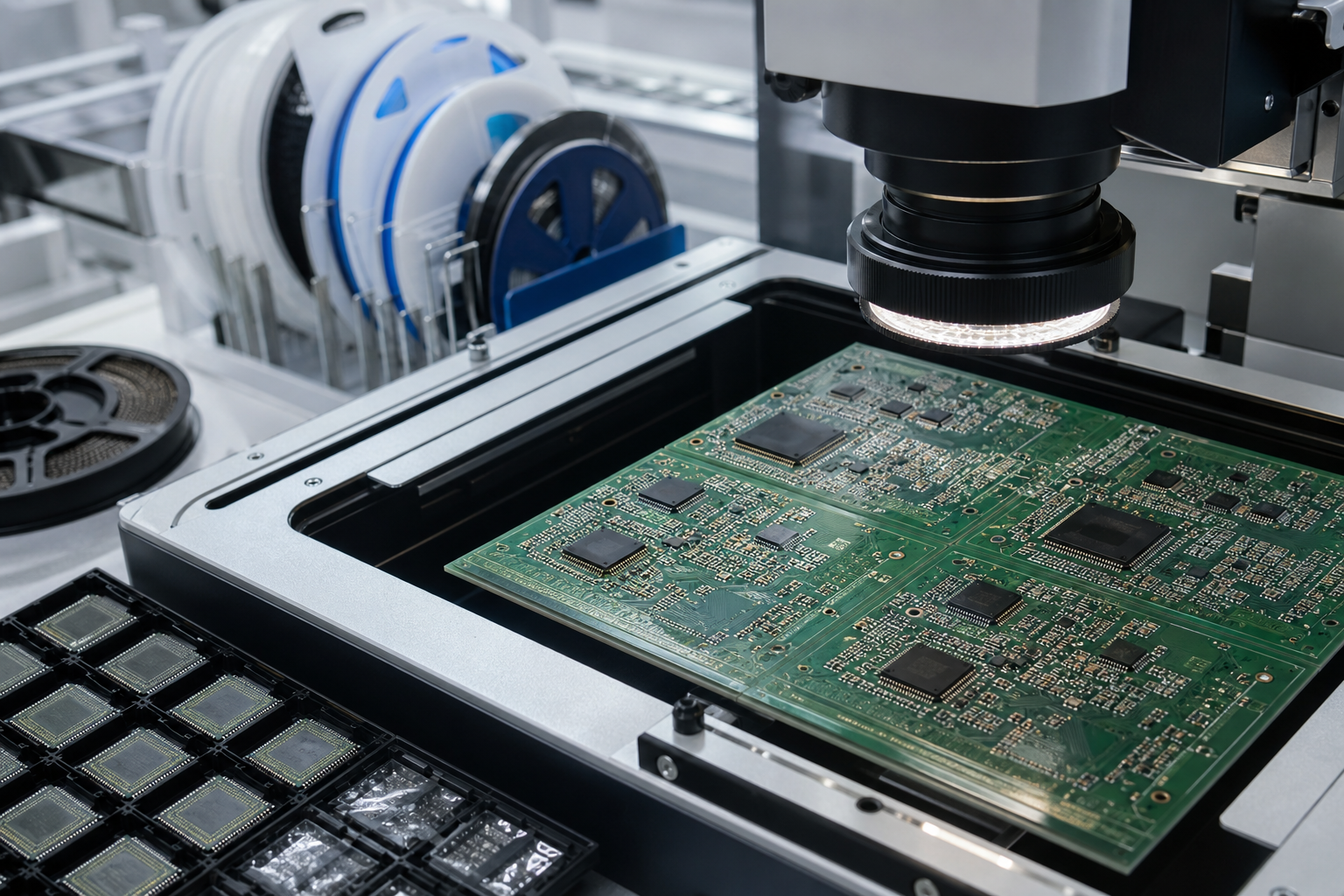
Direct Answer
Fine-pitch IC package assembly cost drivers are not limited to the number of components on the PCB. Buyers should compare the package pitch, pad design, stencil assumptions, placement margin, inspection scope, test depth, rework limits, material risk, and evidence returned by the supplier. A useful RFQ makes each cost assumption visible before the quotation is treated as comparable.
What Changes the Cost Baseline
Fine-pitch BGA, QFN, LGA and compact IC packages can make assembly more sensitive to design data quality, solder paste volume, component handling, board warpage, thermal profile, X-ray coverage, and functional test readiness. The cost impact is usually a combination of process control, defect prevention, verification depth, and engineering change risk. A lower headline price may hide missing inspection or weak assumptions.
Cost Driver Evidence Table
- Cost driver: Package pitch and pad geometry; Why it changes cost or risk: Smaller pitch reduces process margin and may require tighter stencil, placement, reflow, inspection, and rework controls.; Evidence to request: Land pattern review, stencil notes, placement tolerance, reflow assumptions, and inspection plan.
- Cost driver: BGA, QFN and mixed packages; Why it changes cost or risk: Different package types create different inspection, voiding, coplanarity, and thermal risks.; Evidence to request: Package list, MSL handling plan, X-ray scope, AOI limits, and rework rule.
- Cost driver: Board design and panelization; Why it changes cost or risk: Dense routing, warpage sensitivity, fiducials, and panel support can change yield and handling cost.; Evidence to request: DFM comments, panelization advice, fiducial review, and assembly carrier assumptions.
- Cost driver: Inspection and test depth; Why it changes cost or risk: More evidence may be needed when visual access is limited or failure cost is high.; Evidence to request: SPI/AOI/X-ray scope, ICT or FCT coverage, acceptance criteria, and failure-location method.
- Cost driver: Materials and sourcing risk; Why it changes cost or risk: Long-lead ICs, controlled alternates, MSL storage, and traceability can affect quotation stability.; Evidence to request: BOM risk list, approved alternates, receiving records, and lot traceability path.
- Cost driver: Engineering change control; Why it changes cost or risk: Late package or footprint changes can reset quoting, tooling, test, and schedule assumptions.; Evidence to request: Revision baseline, change approval log, and pre-build hold points.
What Buyers Should Include in the RFQ
- Gerber or ODB++ files, centroid data, BOM, assembly drawing, and the latest revision baseline.
- A clear package list for BGA, QFN, LGA, CSP, 0.4 mm or similar fine-pitch parts.
- Inspection expectations for SPI, AOI, X-ray, first article inspection, ICT, FCT, or custom fixtures.
- MSL handling requirements, programming needs, approved alternates, and any customer-controlled components.
- Acceptable rework rules, sample approval path, and evidence required before pilot or production release.
- Target quantity, delivery expectation, shipment requirements, and any quality record format required by the buyer.
How to Compare Supplier Quotations
Ask each supplier to separate material assumptions, SMT process assumptions, inspection scope, test coverage, tooling or fixture needs, and risk items. Then compare whether the quote includes the same evidence package. If one supplier excludes X-ray, fixture preparation, engineering review, or rework control, the price is not directly comparable.
Internal Review Path
Connect this topic with PCBA manufacturing services, DFM engineering review, quality and traceability controls, RFQ submission workflow, electronics manufacturing solutions, ODM engineering support, BGA X-ray inspection criteria, PCBA cost and quality control. This keeps the fine-pitch package discussion aligned with DFM review, RFQ data, assembly risk, inspection evidence, quality records, and sourcing decisions.
Red Flags
- The supplier quotes a total price without explaining stencil, placement, inspection, or test assumptions.
- Fine-pitch ICs are listed in the BOM, but there is no package-level review or X-ray strategy.
- The supplier accepts substitutions without buyer approval rules for package, lifecycle, or process impact.
- First-pass yield, rework reason, and inspection evidence are not separated from final pass status.
- Design revisions change during quoting, but there is no freeze point or change log.
Practical Recommendation
Before choosing a PCBA supplier, request a quotation evidence package: DFM comments, package risk list, process assumptions, inspection scope, test coverage, material risk notes, and acceptance criteria. This makes fine-pitch assembly cost comparable and helps prevent late surprises after purchase order release.
FAQ
Should buyers compare only the unit assembly price?
No. Fine-pitch IC package assembly cost should be compared together with stencil assumptions, placement margin, inspection scope, test coverage, rework limits, sourcing risk, and the evidence that will be returned after the build.
Why can two suppliers quote very different prices for the same design?
They may be assuming different inspection depth, rework risk, fixture readiness, material sourcing rules, or yield exposure. Ask each supplier to list the assumptions behind the quote before comparing totals.
What should be frozen before release to production?
Freeze the BOM baseline, package list, footprint revision, Gerber or ODB++ data, placement file, test requirements, inspection criteria, and buyer approval rules for substitutions or process changes.