
Direct Answer
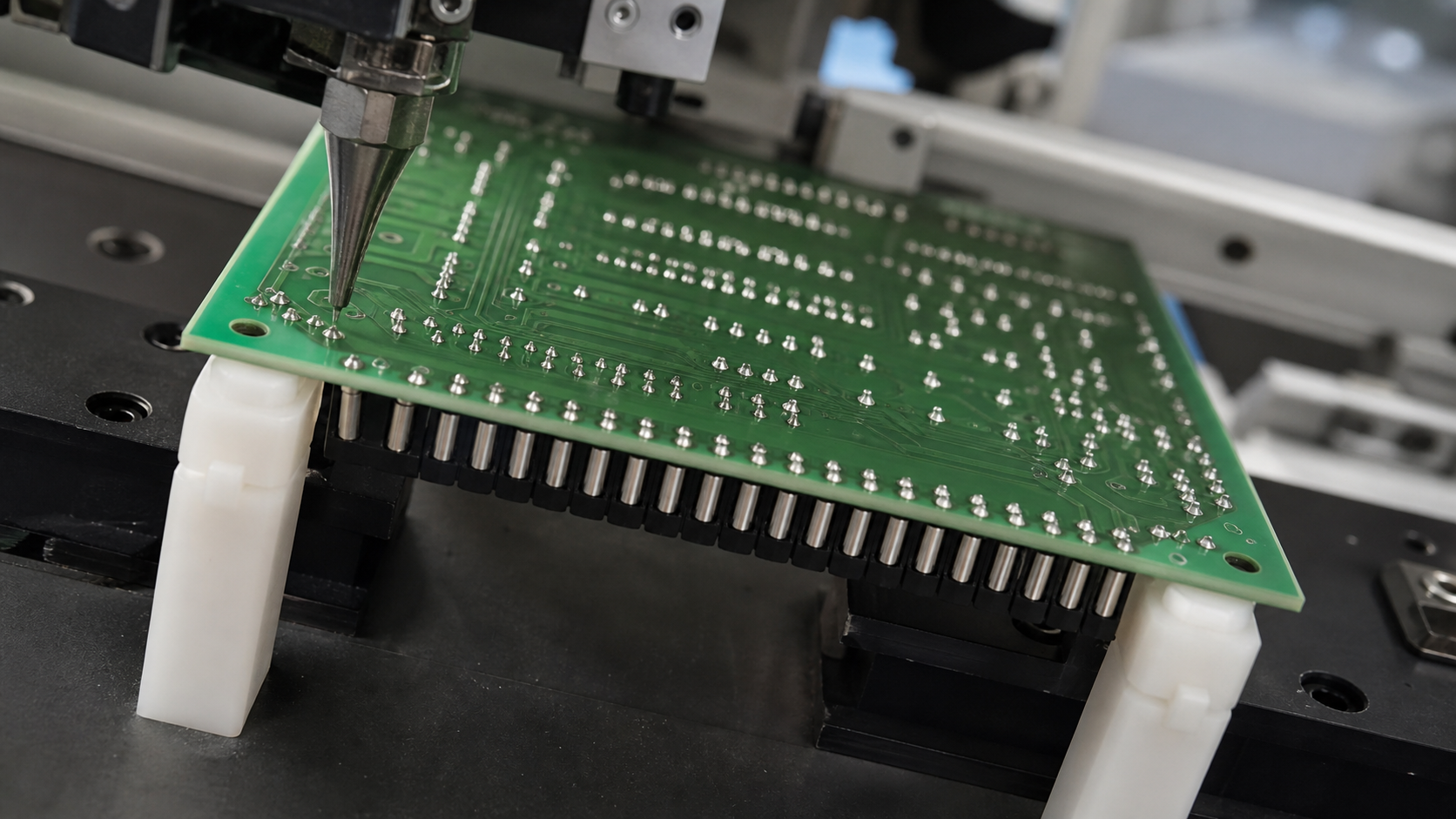
Through-hole soldering is the controlled process of forming reliable joints between component leads and plated holes in a PCB. For buyers, the important decision is not only whether the supplier can solder the parts. The useful RFQ question is how the supplier will choose hand soldering, wave soldering or selective soldering, control hole fill and wetting, inspect defects, limit rework and return acceptance evidence.
How This Guide Differs From The Selective Soldering Page
This page is the parent buyer guide for through-hole soldering controls, defects and acceptance records. The existing selective soldering for through-hole PCBA page stays focused on the selective soldering method. Use this broader guide with PCBA manufacturing services, RFQ submission workflow, DFM engineering review, quality management, SMT versus through-hole assembly, PCB assembly process controls, supplier evidence requirements so assembly route, DFM risk, quality evidence and RFQ scope stay aligned.
Process Route To Define Before Quotation
- Hand soldering: useful for prototypes, low volume, repair, large thermal mass or components that cannot pass an automated process, but it needs operator skill controls and clear inspection criteria.
- Wave soldering: useful for higher-volume through-hole work when board design, pallet design and nearby SMT components allow a stable solder wave.
- Selective soldering: useful for mixed-technology PCBAs, connectors or localized through-hole joints where flux, preheat and solder contact need controlled targeting.
- Mixed route: many PCBAs need reflow first, then selective or manual through-hole soldering, cleaning decisions, inspection and final test as one controlled flow.
Controls Buyers Should Ask About
A strong supplier response should explain hole and pad readiness, lead fit, annular ring condition, component seating, flux selection, preheat, solder alloy, dwell time, solder temperature, nozzle or wave access, fixture support, nearby component protection and cleaning assumptions. If the board includes connectors, relays, transformers, terminals or high-current parts, the process plan should also account for mechanical stress and thermal mass.
Common Defects And What They Mean
- Insufficient hole fill can mean flux, preheat, hole size, plating, dwell time or thermal balance needs review.
- Poor wetting or cold joints can indicate contamination, incorrect heat transfer, insufficient flux activity or unstable process settings.
- Bridging, icicles and solder balls can point to solder volume, withdrawal angle, mask design, flux residue or cleaning issues.
- Lifted pads, burned laminate and damaged connectors usually indicate excessive heat, repeated rework or unsuitable manual soldering limits.
- Hidden reliability risk appears when visual acceptance passes but rework history, thermal stress or weak mechanical retention is not recorded.
Acceptance Evidence To Request
- Process route: which joints are hand soldered, wave soldered or selectively soldered, and why that route was selected.
- First article evidence: solder fill, wetting, component seating, polarity where relevant, nearby SMT protection and open issue closure.
- Inspection criteria: visual, microscope, AOI, X-ray where useful, ICT, FCT or functional test records tied to the product risk.
- Rework control: approved method, heating limit, repeat-attempt limit, reason code and final release evidence.
- Batch release: outgoing QA summary connecting lot identity, inspection result, test result and packaging condition.
RFQ Questions For Buyers
Ask which through-hole parts are mechanically or electrically critical, which soldering method is planned, what process evidence will be returned, how borderline hole fill will be judged, how rework is limited and what test coverage confirms the assembly. For repeat production, ask how the supplier preserves the approved process route and records changes.
Practical Recommendation
Do not approve through-hole soldering only by looking at a unit price. Ask for the route, controls, acceptance evidence and rework rules. This lets sourcing, engineering and quality teams compare suppliers using measurable process evidence instead of generic assembly claims.
FAQ
Is through-hole soldering only manual work?
No. It can be manual, wave soldered, selectively soldered or mixed with SMT reflow depending on the board design, volume, component type and risk.
What defect should buyers watch first?
Insufficient hole fill and poor wetting are common high-value checks because they can affect electrical connection and mechanical reliability.
Should every through-hole joint be X-rayed?
Not always. X-ray may help for hidden joints or critical assemblies, but visual, microscope, ICT, FCT and first article evidence may be enough for many designs.